


ANY PICKS MADE IN THIS VIDEO ARE NOT SPORTSPICKS "OFFICIAL PICKS"
ODDS WILL COME FROM BOTH DRAFTKINGS & FANDUEL
Crick & Cody's Recommended DFS Lineup
Showdown Captain's Mode (DraftKings)
Total Salary Cap = $50,000 (1 Captain / 5 Flex)
Captain: Jahmyr Gibbs (Lions) $14,400
Flex: Luke Musgrave (Packers) $6,400
Flex: Sam LaPorta (Lions) $8,000
Flex: Anders Carlson (Packers) $4,600
Flex: Amon-Ra St. Brown (Lions) $11,600
Flex: Dontayvion Wicks (Packers) $5,000
Total Combined Salary Cap = $50,000
Cody's Pick
Cody's Individual Player Props
Jahmyr Gibbs (Lions) Anytime TD Scorer +135
Amon-Ra St. Brown (Lions) Anytime TD Scorer +130
Amon-Ra St. Brown (Lions) OVER 71.5 Receiving Yards -115
Jahmyr Gibbs (Lions) To Score 2+ TD's +950
THESE ARE NOT SPORTSPICKS "OFFICIAL PICKS"
"Crick's Picks" Are Already Posted
Gonna Be a GOOD NIGHT!!
Good Luck Folks!!!!
-Crickett
ANY PICKS MADE IN THIS SHOW ARE NOT SPORTSPICKS "OFFICIAL PICKS"
START TIME - 7:15 AM EST
World Cup 2026 - My Review
Well after over a hundred games, the 2026 World Cup is over. There hasn't been a world cup like it. Although it is not the first world cup to have water breaks, it is the first world cup to impose them in all games regardless of context. Even when it was already raining, the game would stop in the middle of the half for more water. This had a noticeable effect on the game as it gave a chance to teams to regroup and adjust strategy for the rest of the half. Responsive managers and teams that were struggling for the first twenty minutes benefitted from this. There was an increase in goals after these water breaks which effectively turned each game into four quarters American style. In that respect it was a very unusual tournament.
It was also a very controversial world cup as despite referees generally letting play flow and not blowing for the most minimal of contact, VAR had numerous loud interventions to disallow certain goals or send players off. Croatia had a last minute ...
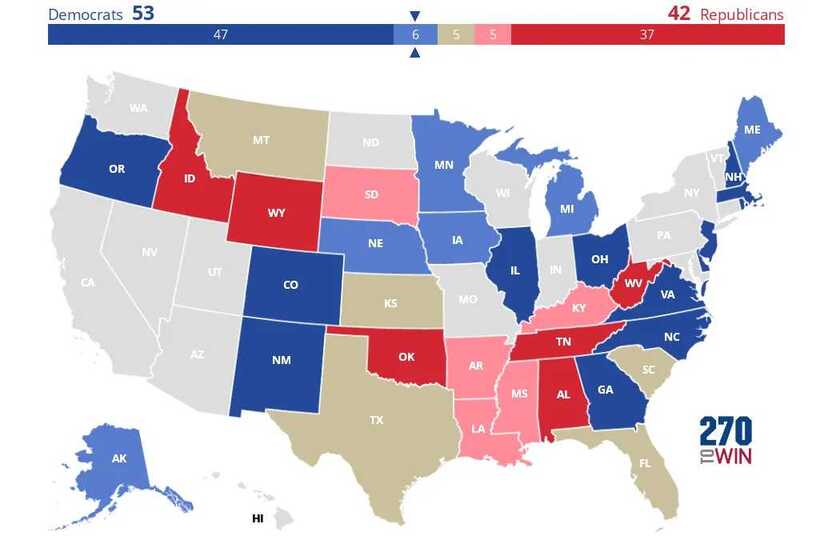
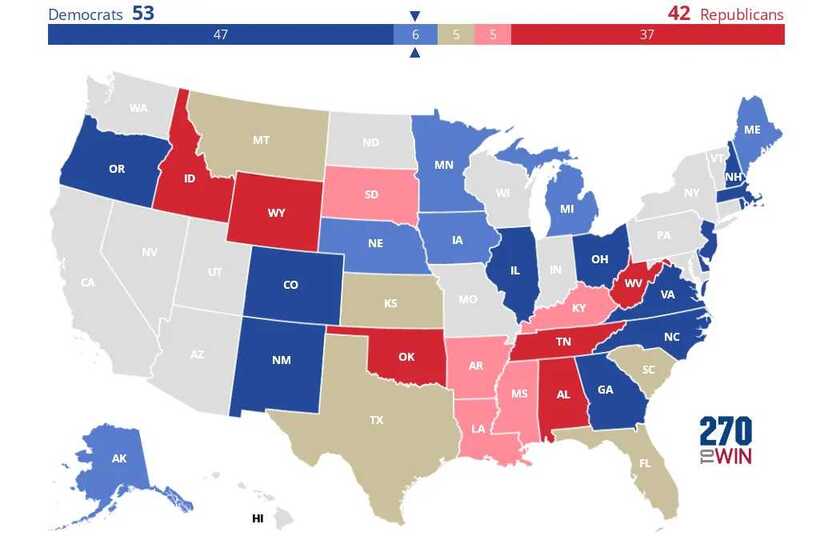
First, four factors dictate whether there is major turnover in the Senate in a midterm election independent of the favorability of the Senate map (due to only one-third of seats being up in any given midterm). Often, as was the case in both 2018 and 2022, is that incumbents are not destined to lose seats, outside of realigning elections in unfavorable maps. This cycle's map favors the GOP, which is why the prediction markets and most forecasters expect a GOP majority in the 2027 Senate. The four factors that prove dangerous to the incumbent party are: first, a recession or cost of living crisis; second, a war; third, a major scandal; and fourth, a sense of betrayal in the voter group that backed the incumbent amongst some portion of their prior electoral coalition. Five midterms feature some combingation of those factors in some significant degree: 1930, 1946, 1958, 1974 and 2006.
Without those factors present in multiple forms, the incumbent party can expect to hold on to seats in states it previously won outside the national margin. When those factors are present, the landscape shifts dramatically. Examining those White House incumbent seats that showed a state-wide election decided by single digits in the prior decade produces the following probabilities: the incumbent White House party lost at least 67% of its incumbent held seats, as much as 85% of its incumbent held seats, and an average of 75% of its incumbent hold seats, rarely upsetting the opposition party in any seat and often losing a surprise or two in seats considered completely safe.