SportsPicks
Politics • Investing & Finance • Sports
All your sports information for those investing Vegas-style in the outcomes of sports games. Predicting games against the line in all sports, especially football, American and English style.
Interested? Want to learn more about the community?

Nations League 16th November 2026 - My Picks

1% The Dutch not to lose vs Germany at 49c (good to 55c)
1% Switzerland vs Scotland under 2.5 goals at 45c (good to 50)
1% Switzerland vs Scotland no on both teams to score at 44c (good to 49c)
1% Serbia not to lose vs Greece at 32c (god to 35c)

Germany vs The Dutch
This match is to determine who wins the group and with the Dutch more or less guaranteed to progress to the quarter finals short of a loss by a figure in the mid double digits in tonight's game. It is Germany who must play on the front foot and pursue a win because as it stands, they are level with Greece on points but behind on head to head. A win would suffice for Germany because at that point, they would be level at the top with the Dutch and Greece, all on 11 points, and at that point the tiebreaker would go to points gained in games between these teams, which would be 5, then goal difference in games between these teams, which would cause Greece to lose out after their 7-0 loss to the Dutch (once again, short of Germany inflicting a drubbing of monumental proportions tonight). If Greece win and Germany inflict a more modest hammering (such as 5-0), Germany would top the group but a closer win would lead to the Dutch winning the group. If Greece fail to win and Germany do win, then the Germans would top the group. If the Germans draw, then they need Greece to lose to qualify. As you can see, the German qualification campaign rests on a knife edge.

Previewing this game is made more complicated not only by these teams having new managers going into the campaign in Xavi for the Dutch and Jürgen Klopp for Germany but also by Klopp's unusual step of calling up two squads for Germany's first four games. He wanted to assess a broader pool of players and so you had players who played the first two games go back to their clubs after those games while the other squad took over. The lineup we saw against Serbia on Friday is much more representative of Germany's first team. This brings with it its own challenges. Although the team the Dutch will face will not be the team they drew against in Amsterdam, it will be a team that has played with each other on the pitch for considerable less time than the Dutch team. Klopp himself described Xavi's team as being more settled while his own is in transition.

Both managers have very consistent tactical visions they want to implement but that does not make tonight's match predictable by any stretch. Both teams have players who grew up learning similar playstyles to the ones the managers want to implement but that does not translate to instant cohesion, especially for Germany, whose national identity has been in flux for some time. Xavi despite being from Barcelona grew up playing the fluid football that Johann Cruyff had implemented at the club and so the transition to managing the Dutch was a natural one. I do see the logic behind Klopp's squad staggering but I am not convinced it will bear fruit quite so quickly.

Both teams have injuries to crucial players, with Germany missing Jamal Musiala and Serge Gnabry while the Dutch are missing Virgil van Dijk, Frenkie de Jong and Brian Brobbey. This will make it a little more difficult for both teams to play their preferred style of football. From a tactical point of view I would generally want to say that Germany have the tactical edge. The gegenpressing revolution of the late 2010s was partially catalysed by the sudden rise of possession orientated positional football of the early 2010s after Pep Guardiola's Barcelona moved into the power vacuum left by the ageing Italian powers and Manchester United. The difficulty is that gegenpressing requires a lot of coordination and practice that takes time to build up, especially at international level with limited practice time. In the first match between these teams it finished 1-1 with a late Dutch equaliser but from a chance creation perspective the Dutch had a very clear edge. Frenkie de Jong will be a big miss for them but de Jong did not play in the first game either.

What this game will come down to is a few things. One is how the Dutch will be able to withstand the German press. In the last match against Serbia, the Serbians were constantly giving the ball away under pressure. I don't expect to see the same from the Dutch but in the first game Germany did turn the ball over high up the pitch on a number of occasions. The next be how the Dutch actually manage to get the ball beyond Germany's press. Without Brobbey they are missing a target man and without van Dijk they are missing someone who can play reliable long balls to find him. The Dutch do have a strong transition threat and I expect them to use Cody Gakpo and Donyell Malen as an outlet to attack Germany's flanks, especially to attack the space behind their fullbacks. One of the recurring patterns against Greece was the Dutch finding space between the Greek lines, moving the ball out to the flanks and crossing it in front of goal. I would keep my eye out on this as being the main avenue of Dutch attack. Finally a crucial question to resolving the game is how much influence the Dutch allow Florian Wirtz to exert over the game. He is not a classic midfielder for a Klopp system as although he presses, he is more primarily a creative outlet that has functioned best so far in the positional system of Xabi Alonso at Bayer Leverkusen. If the Dutch are able to prevent him from finding space, their results of getting a result tonight become much higher.

Germany are favoured by half a goal at home to the Dutch. This is more than I would set it as I have these teams closer to each other right now at their stage of development. Germany have structural issues going back a long time and the Dutch do to a certain extent, which is a large part of why they went for their current managers but right now I would see Xavi as being further along in development. I would have the line a bit closer to a quarter of a goal in this game. So let's see how it plays out. I only have one unit on this because there are a lot of unresolved questions going into this.

Switzerland vs Scotland
Switzerland are expected to rotate heavily having already won the group and secured promotion and Murat Yakin has indicated that he will be giving some players who haven't featured a chance but that it is not going to be crazy experimentation. I expect the overall structure to be the same, controlled possession, patient build up and exploiting space quickly when it emerges. Scotland under Sébastien Pocognoli are going for a more high intensity style based around possession and counterpressing, a notable departure from previous manager Steve Clarke, who was more based around compact defence and physicality. Pocognoli's system is once again one that does not emerge successfully overnight, especially when Scotland are used to playing another system. The Swiss positional system under Yakin is generally strong against the press and are well able to play around a press that is not fully coordinated. The line has already moved heavily against Switzerland in anticipation of heavy rotation so I am staying away from the moneyline but I do see value on the total going under and no on both teams to score because I expect Switzerland to prioritise controlling and managing the game and I'm not convinced that Scotland's high pressing is going to translate into chance creation. I am not sure of exactly how much either side's chance creation will change but I suspect that on aggregate it will be a bit lower on net.

Greece vs Serbia
This is a late addition I am making based on a couple of observations. First, Greece may have been a bad matchup for Germany and the Dutch until Xavi found a way to exploit Greece's shape. Against another defensively minded team like Serbia this may be a lower volatility affair. The other factor is due to the tiebreaker rules, if Germany wins Greece are almost certainly out (Germany would need to win by double digits for Greece to qualify ahead of the Dutch). If Germany lose, Greece are through regardless and if Germany draw Greece only need a draw. So if the game is close late on Greece may well have less appetite for taking risks to win the game and so it may be more likely to end in a draw. It's not guaranteed that Greece would manage the game this way down the stretch but as far as I can tell they are very aware of the qualification permutations so I find it plausible that if Germany vs the Dutch is close, Greece might try and see out the draw in order to cover against the scenario where Germany draw.


Interested? Want to learn more about the community?
What else you may like…
Videos
Podcasts
Posts
Articles
CFP Rankings Reaction - Week 2
00:24:51
Crick's CFP Rankings
00:06:11
Barnes Brothers: European Soccer Preview
00:54:00
SEC Preview Podcast

A full breakdown of every team in the SEC, including talent analysis, coordinator concern, and schedule forecasts, with win total expectations. Enjoy!

SEC Preview Podcast
Smokehouse Mike's NCAAB

March Madness final four recap and Championship preview...

Smokehouse Mike's NCAAB
Smokehouse Mike's NBA
Live Chat
2026 New Live Chat

Per popular demand.

🏀 NBA Protected Teaser | Nov. 16

Wendell Carter Jr. (Magic) 6+ rebounds
Cedric Coward (Grizzlies) 6+ rebounds
Donovan Mitchell (Cavaliers) 4+ assists

🏈 MNF Protected Teaser | LAC @ BAL

Kimani Vidal 10+ rushing yards
Justin Herbert 160+ passing yards
Derrick Henry 16+ rushing attempts

DraftKings: −105

September 14, 2026
post photo preview
Barnes Betting Report: Monday Night Football
Chiefs-Broncos
 
REB Power Ratings
CHIEFS: 7 points better than average
BRONCOS 3 points better than average
Home edge for KC: +2.5
REB Spread: Chiefs by 6.5
REB Moneyline: Chiefs 67%
REB Total: 41
PFF Talent: Favors Chiefs on both sides of the ball
 
Situational Analysis
Coaching: Reid is one of the best ever as is Spags, whereas Payton gives up playcalling for the Broncos and Joseph has had some erratic spots in his career. 
Key Market Trends: Chiefs as 3 points or less: 70% cover rate; Reid has a 65% success rate against the spread in week 1; Nix average QB rating on road is 85 while Mahomes exceeds 100 at home; Denver’s offense against top-5 defenses on the road scores a median of 17 points while Chiefs offense under Mahomes is 27. Public tickets favor the Broncos by a 2 to 1 margin. 
 
Talent according to PFF
Players I expect to have 70+ ratings this season, using PFF's past season grades and match for scheme...
 
Chiefs Defense
CB SNEED
CB WILLIAMS
S ROLAND-WALLACE
S GILMAN
LB TRANQUILL 
LB BOLTON
LB COLTRANE
DE KARLAFTIS
DT JONES
 
Broncos Offense
LT BOLLES
RG MEINERZ
RT MCGLICNHEY
TE ENGRAM
WR WADDLE
WR SUTTON
QB NIX
 
Chiefs Offense
C HUMPHREY
G SMITH
WR WORTHY
WR RICE
RB WALKER
QB MAHOMES
TE KELCE
 
Broncos Defense
S HUFANGA
CB SURTAIN
DE BONITTO
DT JONES
DE ELLISS


Read full Article
post photo preview
Forecasting the Senate in 2026

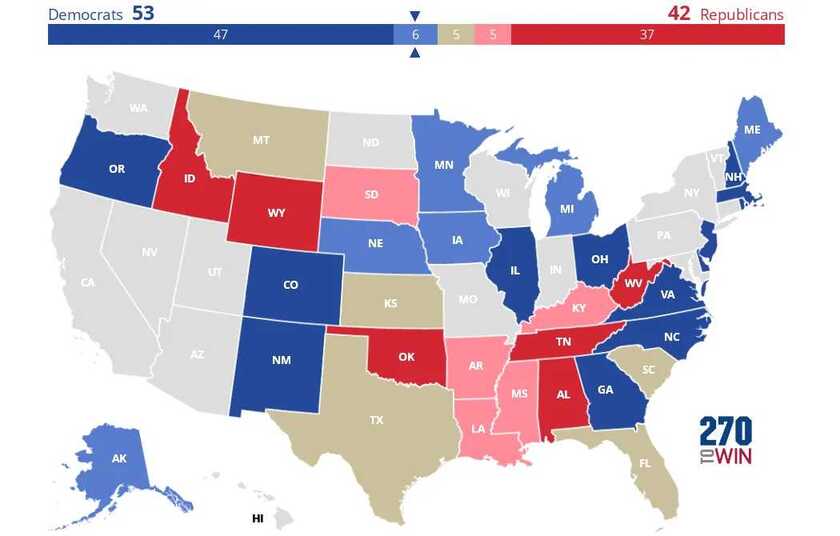
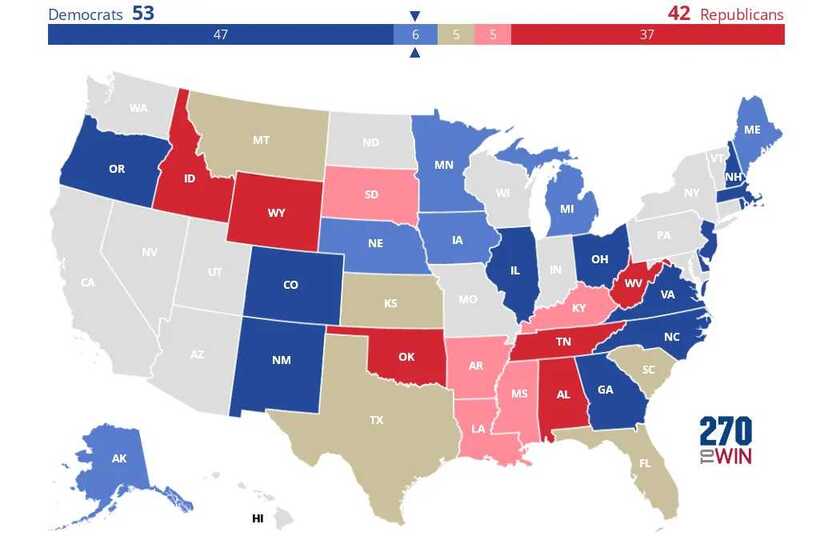
Two conflicting trends dictate the Senate outcome in 2026. The map heavily favors Republicans, as the competitive Senate seats up lean heavily Republican. By contrast, the election context heavily favors Democrats, with war, recession, realignment and scandal tipping in their direction. A deeper dive reveals why prediction markets still likely undersell Democratic prospects.

First, the idea that Senate midterms favor the party out of power in the White House is belied by both recent and a century of history of Senate elections. Unlike the House, only a third of Senate seats face election in any midterm, and that map dictates outcomes unless the election context is particularly bad for the incumbent party.

Consider that the highly unpopular Biden didn’t lost any net Senate seats in 2022 and Trump added Senate seats in the Democratic friendly cycle in 2018. Equally, Clinton didn’t lose net Senate seats in 1998 nor did W. in 2002. Even low-approval election cycles like 1966 and 1982 didn’t produce a big swing in the Senate. Indeed, since 1934, the party in power only lost 10% or more of their Senate seats (4+) less than half of the time. Democrats need a flip of exactly that — at least 4 Senate seats — to retake power in the Senate.

Then take a look at the map, and you can see the reason for optimism in GOP circles and some traders in the prediction markets. Only 2 GOP-held seats are in states Trump won by less than double digits, while 2 Democratic-held seats are in states Trump won, and one of those GOP held seats features a long-time incumbent who typically runs double-digits ahead of the GOP norm (Collins in Maine). This is why the GOP entered the year believing odds of losing the Senate were remote, and the prediction markets mostly concurred.

But this ignores the counter-trend: the degree of election dismay with the incumbent party in the White House, and the reasons for that dismay. Presidential job approval has not been a neat proxy for Senate midterms because it depends on the reason for that dissatisfaction in the electorate. Four factors drive Senatorial midterms: war, recession/cost of living, realignment, and scandal. When two of those four factors are not present and don’t dominate, then the incumbent party’s odds of losing 4+ Senate seats drops to less than 20%. By contrast, when two of those four factors are present and do predominate, then the odds of the incumbent party losing 4+ Senate seats rises to 100%. Indeed, the median number of Senate seats lost when some combination of war, recession, realignment and scandal, are present, the White House party loses at least 8 Senate seats.

A few examples: while FDR added Senate seats in 1934 midterms, he lost 9 in 1938 midterms due to the combination of recession and scandal (trying to stack SCOTUS). 1942 and 1946 gave us war and recession to cost Democrats 8 and 12 Senate seats alike. 1950 gave us war again and scandals concerning the war costing Democrats 5 Senate seats. 1958 gave us recession and scandal, costing Ike 15 Senate seats. While JFK added Senate seats in 1962 and Nixon added Senate seats in 1970, only Watergate and stagflation in 1974 or the combination of Iran Contra and vulnerable class of 1980 incumbents cost the incumbent party 4 or more Senate seats until the realignment election of 1994, where evangelicals shifted their down-ballot voting to the GOP en masse. It took war and scandal in 2006 to see the Senate switch 4+ Senate seats again.

That’s the story of 2026: a very GOP favorable Senate map versus a very Democratic friendly election cycle. The GOP enters election season with all four factor present: war, recession/cost of living, realignment, and scandal. The Iran War was already deeply unpopular, and it’s impact on the economy in gas and diesel prices turns Americans sour on their current economic prospects, as wages fall behind, housing and health care feel increasingly unaffordable, labor force participation continues to drop, the the mirage of AI keeps the GDP just above a technical recession. The Epstein scandal remains one of the worst scandals in American political history, and Trump managed to associate himself deeply with the scandal in his handling of it. Then the realignment, as the new Trump 2024 voters joined the Obama-Trump converts of 2016 in abandoning GOP identity, already evident in surveys and primary participation.

A quintet of voter groups appear to be realigning away from the Republican brand — hispanic voters, black voters, industrial area voters, libertarian-leaning voters, and war-skeptical voters alike. This realigning electorate shows up disproportionately in key Senate contests. The war-skeptical voters in states like Maine, New Hampshire, Ohio, Michigan, Iowa, Montana, Nebraska, and Alaska (these are the states W failed to gain in between 2000 and 2004 due to the Iraq War before it even turned unpopular). The hispanic voters in states like Florida and Texas. The African-American voters in states like North Carolina and Georgia. The industrial voters in Ohio and Michigan. The libertarian leaving voters in states like New Hampshire, Alaska, Texas and Florida.

Thus, many of the states that seem “Safe” on the map are anything but, as their realigning electorates shift back against the Republican brand, with all of them having recent histories in electoral cycles of favoring Democrats or being true swing states. Take states like Florida and Texas where suburban margins began to erode for the GOP in the Trump era but countered that by massive margin shifts in hispanic and black precincts. Primary participation, voter identification, and public opinion surveys show those black and hispanic voters shifting back massively away from the GOP brand, which, given the erosion in some suburban areas and losses with younger generations, makes states Florida and Texas closer to competitive than double-digit leans.

In big swing election cycles, even “safe” Senate seats can suddenly turn razor close, as Bob Dole found out in 1974, barely holding on to his Kansas seat before being the VP nominee two years later. Strong independent candidates in Kansas, Nebraska, South Dakota and Montana may pose a unique threat to GOP held seats, as the Nebraska race in 2024 showed, with Osborn running 17 points ahead of Harris’ margin in the state. Democrats field the much better candidate in Ohio with a proven track record of out-performing Democratic margins in the state, while the Texas GOP nominee faces abandonment from his own party after they spent over $100M bashing him in the state for a disliked party incumbent. Alaska primary results suggest the Democratic nominee already holds the edge in that ranked choice voting state, while the famed cross-over support for Collins in Maine appears to be fading with newer generations taking over the voter rolls. My current map would be as follows, with surprising closer-than-expected races in Montana, Kansas, Louisiana, Florida, Mississippi, South Dakota, South Carolina and Kentucky, and a median map of Democrats holding 53+ Senate seats after the 2026 elections.


If past is prologue, the map won’t save the GOP in 2026, and an ever bigger tsunami may be incoming than anyone in Washington expects.

Read full Article
post photo preview
OFFICIAL PICKS: Midterms, 2026
House Elections Projections
 
The House tends to be more responsive to midterm dynamics, but, like the Senate, swings hard in elections where some combination of the Four Factors are present -- cost of living crisis or recession; war; major scandal; betrayal or down-ballot realignment. A fun map to use is this simulator, which takes partisan averages from existing models, and plugs in the map based on your adjustment of the generic ballot edge for one party or another. https://globalelectionsimulator.com/#/usa-house
 
Historic Norms: When a combination of the Four Factors are present, this is the kind of swing you get:
1930: 52 seat swing
1946: 55 seat swing
1958: 49 seat swing
1974: 49 seat swing
1994: 54 seat swing
2006: 31 seat swing
 
2026 PROJECTIONS


Only for Supporters
To read the rest of this article and access other paid content, you must be a supporter
Read full Article
See More
Available on mobile and TV devices
google store google store app store app store
google store google store app tv store app tv store amazon store amazon store roku store roku store
Powered by Locals