


SportsPicks
Politics • Investing & Finance • Sports
All your sports information for those investing Vegas-style in the outcomes of sports games. Predicting games against the line in all sports, especially football, American and English style.
Interested? Want to learn more about the community?
Crick's Corner: Key Question Facing Each NFC Playoff Team

-Eagles

How Healthy is Jalen Hurts?

  • Jalen Hurts has had an MVP-caliber season, and went 14-1 in the 15 games he started this season. He threw for 3,701 yards with 22 TD's and just 6 INT's while completing 66.5 % of his passes. He was also electric in the ground game, rushing 165 times for 760 yards and 13 TD's. He became the first player in NFL history to throw for 20+ TD's, rush for 10+ TD's, and throw fewer than 10 INT's. As good as Hurts was this season, the Defense was arguably just as strong. They led the league in sacks in 2022 with 70, and through Week 17 were on a streak of five straight games with 6+ sacks which is the longest such streak all-time. They were 2nd in the league in total defense allowing just 301.5 yards per game, and forced 27 turnovers(5th). 53 of their 70 sacks came with just a "4-man" rush, which is 15 more sacks with a "4-man" rush than any other team, in a single season, since such stats have been tracked. However, in the two games that Hurts missed, the Philly D gave up a combined 60 points and 732 yards. They were 0-2 in those contests. One of the biggest issues in those games were turnovers resulting in a short field for opposing offenses. The Eagles turned the ball over just 13 times in it's first 14 games, but turned it over 5 times in the two games that Hurts missed including 4 against the Cowboys. As of right now, it looks as though Hurts will be ready to go after their first-round bye, but if he gets banged up and has to exit a game for any reason, this offense takes a major step back. For the Eagles to make a real run at the Lombardi Trophy, they will need their best player on the field performing at the elite level he has all season.

-49ers

Do they have enough offense to make a deep run?

  • Historically, Kyle Shanahan's offenses have not been great in the post-season. In his six career playoff games as a Head Coach his offenses have averaged a very modest 21.7 points per game, with his QB's accounting for a total of 4 TD's and 6 INT's. Brock Purdy was the very last pick in the 2022 NFL Draft and has filled in admirably after the 49ers lost not one, but two starting QB's to season-ending injuries this season. Since Jimmy Garoppolo got hurt in Week 13, Purdy has thrown for 1,374 yards with 13 TD's and only 4 INT's while completing 67% of his passes. He has been very efficient with the football, and really made it easier on that exceptional 49ers defense by not turning the ball over and putting his team in tough spots. The San Francisco defense is the best in the league, leading the NFL in total defense(300.6 ypg) and points allowed per game(16.3 ppg). Shanahan's teams have won play-off games with defense. His defenses have forced at least 1 turnover in each of his 6 career play-off games, and allowed points on just 31% of opponent drives. However, this hasn't translated into an NFL Title. The 49ers will assuredly face some very good QB's in these playoffs, and I'm not sure that Purdy can take over a game and win it for his team if he gets put in that spot. As great as the defense is, if they can't score with some of the more top-tier offenses in the league, they may find themselves in a hole at some point that they can't climb out of.

-Vikings

Will Kirk Cousins lead the Vikings to the "Promised Land"?

  • Kirk Cousins passed for 4,547 yards and 29 TD's this season. Both of which were among the league leaders in those categories. He completed 65.9% of his passes, but also had 14 INT's. Cousins 13 TD passes in the 4th quarter and overtime were tied for the league lead with Tom Brady. However, his QBR of 49.8 ranked him 23rd in the league, just ahead of Ryan Tannehill and right behind Matthew Stafford. His average yards per attempt was a very pedestrian 7.07, which ranks 15th in the league. When he targeted anyone but Justin Jefferson, that average dropped to 6.1 yards per attempt. That figure alone would be 2nd to last in the NFL, ahead of only Kyler Murray. Now a reason for optimism is that Minnesota has won an NFL record 11 games this season decided by one score or less, but the Vikings D has ranked last in the league in yards allowed per game for most of the season. The only thing that has saved them is the fact the defense has been exceptionally good at the end of games. They're 3rd in the NFL with a plus-9 turnover margin on drives that have started in the 4th quarter or Overtime. It's clear this team knows how to win in a close game, but Cousins has shown a tendency to struggle in big games throughout his career. For this team to be successful, they'll need their field general clicking on all cylinders down the stretch. If he isn't, I'm not sure this defense is consistently good enough to shut down the offenses they'll encounter in the post-season.

-Buccaneers

Can they stay out of their own way?

  • A theme of Tampa Bay's 2022 season has been that they constantly seem to "shoot themselves in the foot". The Bucs had 29 dropped passes this season, tied for the 2nd worst mark in the league. They lost 12 fumbles this season ranking 27th in the NFL, and turned the ball over on 10.3% of their offensive possessions(23rd). The offense was only able to muster 1.60 points per drive(26th), converted just 37.4% of 3rd downs(21st), and scored TD's on just 52.0% of their red zone trips(22nd). A huge part of the offensive woes has been the mysterious lack of chemistry between Tom Brady and Mike Evans. In Brady's first two seasons in Tampa, he had 26 TD's and 5 INT's when targeting Evans. This season, when targeting Evans, Brady has just 6 TD's and 7 INT's. Now Evans showed up BIG TIME in the Week 17 game vs Carolina that clinched the NFC South Title for the Bucs. He had 10 catches for 207 yards and 3 TD's, but that was his first TD since Week 4. Although Brady has only been sacked 22 times this season, he has often been under pressure due to insufficient line play. The lack of time in the pocket has forced Brady to rely heavily on check-downs to RB's, or short completions to Chris Godwin. If the O-Line can polish up their mistakes and avoid key penalties in the red area that have haunted them all year, this Buccaneers D is plenty good enough to make a run at TB12's 8th ring. But if they continue to make the same mistakes they have throughout the 2022 campaign, it might make for a quick exit for one of the pre-season Super Bowl Favorites.

-Cowboys

Can Dallas get it done on the road in the Playoffs?

  • The Cowboys have lost 8 straight road playoff games, a streak dating back 30 years. The last QB that Dallas beat in a road playoff game was Steve Young. They have gone 8-1 in games at home this season, but just 4-4 on the road. At times this season, Dallas has been top-tier on both sides of the ball. The offense ranks 4th in the NFL in points scored at 27.5 points per game, and 11th in yards per game(354.9 ypg). The defense has been equally as exceptional, ranking 5th in points allowed(20.1 ppg), and 12th in yards allowed(330.2 ypg). Where the Cowboys have separated themselves in 2022 is that they have forced a league-leading 33 takeaways, recovering 17 fumbles(1st) and intercepting opposing QB's 16 times(7th). The Dallas Defense has forced turnovers on 16.2% of opponent drives, and gives up an average of just 1.65 points per drive. Combine that with an offense that has scored TD's on 71.4% of its trips to the red zone(1st), and it would appear that they have all the tools to make a run at the Championship. However, their struggles on the road are well documented, and continue to be an ongoing issue with this franchise. They have to find a way to get that monkey off their back, and get some tough wins away from AT&T Stadium because they will, most likely, be on the road for the entirety of the 2022 post-season.

-Giants

Can they find some offensive balance and let Daniel Jones be "That Guy"?

  • The New York Giants have been one of the pleasant surprises in the NFL in Head Coach Brian Daboll's first season in charge. A team that was widely picked by many to finish in the bottom half of the league, in the pre-season, went 9-7-1 and made their first playoff berth since 2016. Saquon Barkley, very well, might be the NFL's "Comeback Player of the Year" rushing for a career-high 1,312 yards and 10 TD's. He also tied for the team lead in receptions, catching 57 passes for an additional 338 yards. However, New York has been mostly one-dimensional on offense this year, and it's definitely hurt them at times. The Giants rank 8th in the league in rushing attempts per game, and just 25th in passing attempts per game. Daniel Jones has had a solid season, in his own right, throwing for 3,205 yards with 15 TD's and only 5 INT's, while also rushing for 708 yards and an additional 7 TD's. A big key for the Giants success throughout these playoffs will be the connection between Jones and his top wideout Darius Slayton. Slayton has 46 catches for 724 yards(15.7 ypc), but has only found the end zone twice this season. When Jones has targeted Slayton in 2022, he has averaged 10.2 yards per attempt which ranks 5th in the league. New York has also been one of the top red zone teams, on both sides of the ball, in 2022. They've scored TD's on 63.3% of their trips to the red zone, while allowing TD's on just 49.2% of opponent drives that have reached the scoring area. If the Giant's offense can create some opportunities downfield between Jones and Slayton and take some pressure off their ground game, it should allow them to stretch out opposing defenses and create some running lanes for Barkley. If they can't find some balance on the offensive side of the ball though, opposing defenses will be able to stack the box and take away what they do best. Traditionally, one-dimensional teams don't tend to fair very well against the better teams in the league.

-Seahawks

Can they get enough pressure on opposing QB's?

  • In 2022, the Seattle defense was 7th in the league with 45 sacks, and 8th in sacks per opponent drop backs. However, Seattle's pass rush win-rate was just 33.5% ranking 28th, and they pressured opposing QB's on just 28.9% of drop backs(21st). They have forced 25 turnovers(11 fumbles, 14 INT's) which is 9th among NFL squads, but opposing QB's averaged 2.99 seconds before throwing the ball, the highest such figure in the league. They will face some of the top offenses in the league in the post-season, led by QB's who get the ball out quick and efficiently, putting pressure on the secondary to make plays in space. In games that Seattle has struggled this season, it was due to the fact that they couldn't get enough pressure on opposing QB's. With an offense that has turned the ball over 23 times(17th), including 11 lost fumbles(24th), the defense may be forced into some tough spots where opponents have a short field. If that happens, they will need to get to opposing QB's and force some sacks to shut down scoring opportunities. If not, I don't think the offense has been consistent enough to win a shoot-out style game and it will ultimately spell doom for the "12th man" and company.

Good Luck this Weekend!!!!

-Crickett

Interested? Want to learn more about the community?
What else you may like…
Videos
Podcasts
Posts
Articles
Barnes Brothers: European Soccer MEGA Preview
01:08:49
Barnes Brothers: World Cup Final Preview
00:46:09
World Cup Final Preview: Barnes Brothers

Enjoy before the big finale on Sunday.

00:46:09
SEC Preview Podcast

A full breakdown of every team in the SEC, including talent analysis, coordinator concern, and schedule forecasts, with win total expectations. Enjoy!

SEC Preview Podcast
Smokehouse Mike's NCAAB

March Madness final four recap and Championship preview...

Smokehouse Mike's NCAAB
Smokehouse Mike's NBA
LIVE CHAT FOR 2026

Now open!

🔥 September 4, 2026 Degenerate Special 🔥

Sale vs Sanchez. Main ticket, moonshot sprinkle, and the K prop.

1. 3-Leg Main (SGP+) — Odds: -112

SGP — ATL Braves @ PHI Phillies • 6:41 PM ET
• Chris Sale 6+ Strikeouts
• Cristopher Sanchez 6+ Strikeouts

Plus
• Zebby Matthews 3+ Strikeouts (-850) — MIN Twins @ CWS White Sox 7:41 PM ET

2. 5-Leg Moonshot Sprinkle — Odds: +218

SGP — ATL @ PHI • 6:41 PM ET
• Chris Sale 6+ Strikeouts
• Cristopher Sanchez 6+ Strikeouts

Plus
• Zebby Matthews 4+ Strikeouts (-265) — MIN @ CWS 7:41 PM ET
• Logan Gilbert 5+ Strikeouts (-620) — ATH @ SEA Mariners 10:11 PM ET
• Blake Snell 6+ Strikeouts (-770) — WSH Nationals @ LAD Dodgers 10:11 PM ET

3. Best K Prop
• Cristopher Sanchez Over 6.5 Strikeouts (-118) — ATL @ PHI 6:41 PM ET

Main first. Prop second. Sprinkle last.

#MLBProps #StrikeoutProps #KProps #DegenerateMode

post photo preview
Crick's Picks: College Football - 9/3/26

You & Your Beautiful Families STAY SAFE Out There!!! Good Luck & Good Gamblin!!!!

ATS = Against The Spread

ML = Money Line

ALT = Alternate Spreads

TT = Team Total

SGP = Same Game Parlay

1Q, 2Q, etc. = Bet Is Only For That Individual Quarter

1H & 2H = Bet Is Only For That Individual Half

1/2-Unit = 50% Unit (.5 Units)

1/4-Unit = 25% Unit (.25 Units)

SPRINKLE = At Your Discretion (DON'T GO CRAZY!!!!)

THESE ARE NOT SPORTSPICKS "OFFICIAL PICKS"

ALL MY ODDS COME FROM DRAFTKINGS

Crick's Picks Results: Week 0/YTD

Week 0

  • 1-1 ATS -1.22 Units

0-1 (3-Unit Plays)

1-0 (2-Unit Plays)

  • 0-2 ALT -2.00 Units

0-2 (1-Unit Plays)

College Football: Week 0 - Overall = -3.22 Units

Year To Date

  • 1-1 ATS -1.22 Units

0-1 (3-Unit Plays)

1-0 (2-Unit Plays)

  • 0-2 ALT -2.00 Units

0-2 (1-Unit Plays)

**College Football: Year To Date...

post photo preview
post photo preview
Forecasting the Senate in 2026

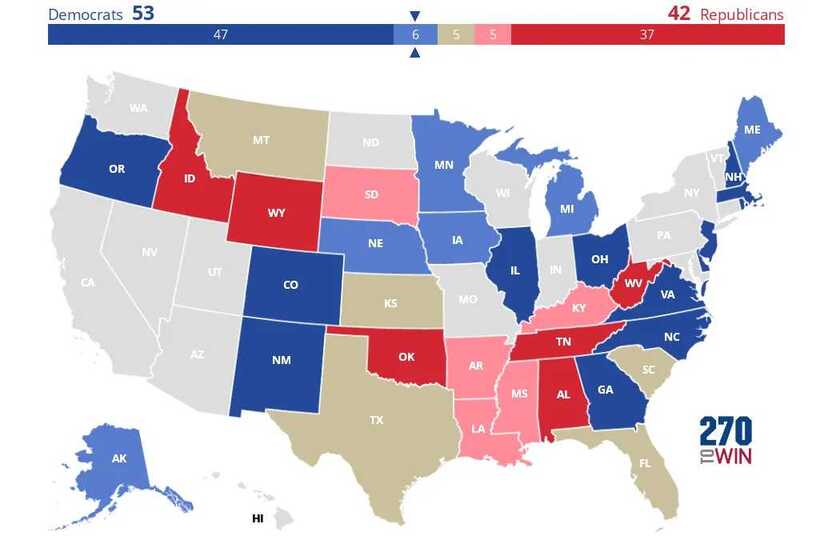
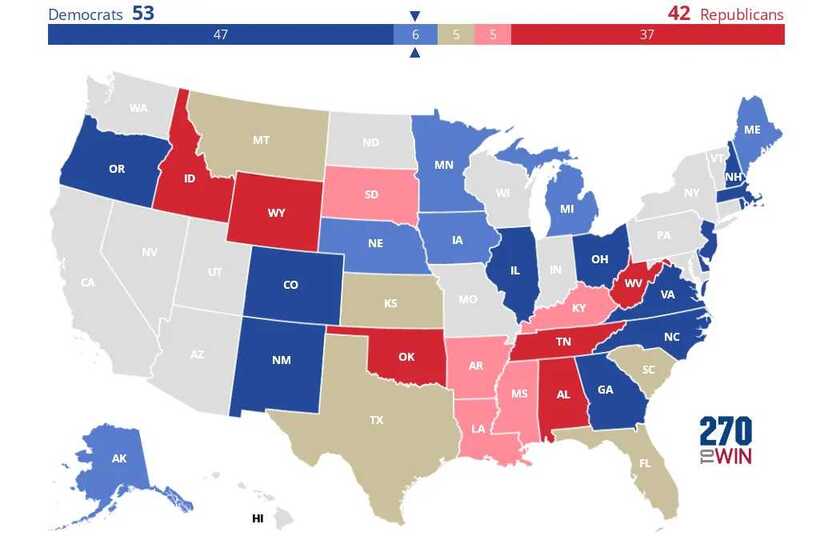
Two conflicting trends dictate the Senate outcome in 2026. The map heavily favors Republicans, as the competitive Senate seats up lean heavily Republican. By contrast, the election context heavily favors Democrats, with war, recession, realignment and scandal tipping in their direction. A deeper dive reveals why prediction markets still likely undersell Democratic prospects.

First, the idea that Senate midterms favor the party out of power in the White House is belied by both recent and a century of history of Senate elections. Unlike the House, only a third of Senate seats face election in any midterm, and that map dictates outcomes unless the election context is particularly bad for the incumbent party.

Consider that the highly unpopular Biden didn’t lost any net Senate seats in 2022 and Trump added Senate seats in the Democratic friendly cycle in 2018. Equally, Clinton didn’t lose net Senate seats in 1998 nor did W. in 2002. Even low-approval election cycles like 1966 and 1982 didn’t produce a big swing in the Senate. Indeed, since 1934, the party in power only lost 10% or more of their Senate seats (4+) less than half of the time. Democrats need a flip of exactly that — at least 4 Senate seats — to retake power in the Senate.

Then take a look at the map, and you can see the reason for optimism in GOP circles and some traders in the prediction markets. Only 2 GOP-held seats are in states Trump won by less than double digits, while 2 Democratic-held seats are in states Trump won, and one of those GOP held seats features a long-time incumbent who typically runs double-digits ahead of the GOP norm (Collins in Maine). This is why the GOP entered the year believing odds of losing the Senate were remote, and the prediction markets mostly concurred.

But this ignores the counter-trend: the degree of election dismay with the incumbent party in the White House, and the reasons for that dismay. Presidential job approval has not been a neat proxy for Senate midterms because it depends on the reason for that dissatisfaction in the electorate. Four factors drive Senatorial midterms: war, recession/cost of living, realignment, and scandal. When two of those four factors are not present and don’t dominate, then the incumbent party’s odds of losing 4+ Senate seats drops to less than 20%. By contrast, when two of those four factors are present and do predominate, then the odds of the incumbent party losing 4+ Senate seats rises to 100%. Indeed, the median number of Senate seats lost when some combination of war, recession, realignment and scandal, are present, the White House party loses at least 8 Senate seats.

A few examples: while FDR added Senate seats in 1934 midterms, he lost 9 in 1938 midterms due to the combination of recession and scandal (trying to stack SCOTUS). 1942 and 1946 gave us war and recession to cost Democrats 8 and 12 Senate seats alike. 1950 gave us war again and scandals concerning the war costing Democrats 5 Senate seats. 1958 gave us recession and scandal, costing Ike 15 Senate seats. While JFK added Senate seats in 1962 and Nixon added Senate seats in 1970, only Watergate and stagflation in 1974 or the combination of Iran Contra and vulnerable class of 1980 incumbents cost the incumbent party 4 or more Senate seats until the realignment election of 1994, where evangelicals shifted their down-ballot voting to the GOP en masse. It took war and scandal in 2006 to see the Senate switch 4+ Senate seats again.

That’s the story of 2026: a very GOP favorable Senate map versus a very Democratic friendly election cycle. The GOP enters election season with all four factor present: war, recession/cost of living, realignment, and scandal. The Iran War was already deeply unpopular, and it’s impact on the economy in gas and diesel prices turns Americans sour on their current economic prospects, as wages fall behind, housing and health care feel increasingly unaffordable, labor force participation continues to drop, the the mirage of AI keeps the GDP just above a technical recession. The Epstein scandal remains one of the worst scandals in American political history, and Trump managed to associate himself deeply with the scandal in his handling of it. Then the realignment, as the new Trump 2024 voters joined the Obama-Trump converts of 2016 in abandoning GOP identity, already evident in surveys and primary participation.

A quintet of voter groups appear to be realigning away from the Republican brand — hispanic voters, black voters, industrial area voters, libertarian-leaning voters, and war-skeptical voters alike. This realigning electorate shows up disproportionately in key Senate contests. The war-skeptical voters in states like Maine, New Hampshire, Ohio, Michigan, Iowa, Montana, Nebraska, and Alaska (these are the states W failed to gain in between 2000 and 2004 due to the Iraq War before it even turned unpopular). The hispanic voters in states like Florida and Texas. The African-American voters in states like North Carolina and Georgia. The industrial voters in Ohio and Michigan. The libertarian leaving voters in states like New Hampshire, Alaska, Texas and Florida.

Thus, many of the states that seem “Safe” on the map are anything but, as their realigning electorates shift back against the Republican brand, with all of them having recent histories in electoral cycles of favoring Democrats or being true swing states. Take states like Florida and Texas where suburban margins began to erode for the GOP in the Trump era but countered that by massive margin shifts in hispanic and black precincts. Primary participation, voter identification, and public opinion surveys show those black and hispanic voters shifting back massively away from the GOP brand, which, given the erosion in some suburban areas and losses with younger generations, makes states Florida and Texas closer to competitive than double-digit leans.

In big swing election cycles, even “safe” Senate seats can suddenly turn razor close, as Bob Dole found out in 1974, barely holding on to his Kansas seat before being the VP nominee two years later. Strong independent candidates in Kansas, Nebraska, South Dakota and Montana may pose a unique threat to GOP held seats, as the Nebraska race in 2024 showed, with Osborn running 17 points ahead of Harris’ margin in the state. Democrats field the much better candidate in Ohio with a proven track record of out-performing Democratic margins in the state, while the Texas GOP nominee faces abandonment from his own party after they spent over $100M bashing him in the state for a disliked party incumbent. Alaska primary results suggest the Democratic nominee already holds the edge in that ranked choice voting state, while the famed cross-over support for Collins in Maine appears to be fading with newer generations taking over the voter rolls. My current map would be as follows, with surprising closer-than-expected races in Montana, Kansas, Louisiana, Florida, Mississippi, South Dakota, South Carolina and Kentucky, and a median map of Democrats holding 53+ Senate seats after the 2026 elections.


If past is prologue, the map won’t save the GOP in 2026, and an ever bigger tsunami may be incoming than anyone in Washington expects.

Read full Article
post photo preview
OFFICIAL PICKS: Midterms, 2026
House Elections Projections
 
The House tends to be more responsive to midterm dynamics, but, like the Senate, swings hard in elections where some combination of the Four Factors are present -- cost of living crisis or recession; war; major scandal; betrayal or down-ballot realignment. A fun map to use is this simulator, which takes partisan averages from existing models, and plugs in the map based on your adjustment of the generic ballot edge for one party or another. https://globalelectionsimulator.com/#/usa-house
 
Historic Norms: When a combination of the Four Factors are present, this is the kind of swing you get:
1930: 52 seat swing
1946: 55 seat swing
1958: 49 seat swing
1974: 49 seat swing
1994: 54 seat swing
2006: 31 seat swing
 
2026 PROJECTIONS


Only for Supporters
To read the rest of this article and access other paid content, you must be a supporter
Read full Article
post photo preview
Barnes Betting Report: Senate 2026

First, four factors dictate whether there is major turnover in the Senate in a midterm election independent of the favorability of the Senate map (due to only one-third of seats being up in any given midterm). Often, as was the case in both 2018 and 2022, is that incumbents are not destined to lose seats, outside of realigning elections in unfavorable maps. This cycle's map favors the GOP, which is why the prediction markets and most forecasters expect a GOP majority in the 2027 Senate. The four factors that prove dangerous to the incumbent party are: first, a recession or cost of living crisis; second, a war; third, a major scandal; and fourth, a sense of betrayal in the voter group that backed the incumbent amongst some portion of their prior electoral coalition. Five midterms feature some combingation of those factors in some significant degree: 1930, 1946, 1958, 1974 and 2006.

Without those factors present in multiple forms, the incumbent party can expect to hold on to seats in states it previously won outside the national margin. When those factors are present, the landscape shifts dramatically. Examining those White House incumbent seats that showed a state-wide election decided by single digits in the prior decade produces the following probabilities: the incumbent White House party lost at least 67% of its incumbent held seats, as much as 85% of its incumbent held seats, and an average of 75% of its incumbent hold seats, rarely upsetting the opposition party in any seat and often losing a surprise or two in seats considered completely safe. 


Only for Supporters
To read the rest of this article and access other paid content, you must be a supporter
Read full Article
See More
Available on mobile and TV devices
google store google store app store app store
google store google store app tv store app tv store amazon store amazon store roku store roku store
Powered by Locals