


SportsPicks
Politics • Investing & Finance • Sports
All your sports information for those investing Vegas-style in the outcomes of sports games. Predicting games against the line in all sports, especially football, American and English style.
Interested? Want to learn more about the community?
Crick's Picks: College Basketball 3/4/23

These are not Sportspicks "Recommended Picks"

3/3/23 Results

  • 9-3-1 ATS

  • 5-2 ML's Parlay Lost

  • 0-1 "Longshot" VALIANT EFFORT ECU!!

  • No "Game of the Night" Pick

Game of the Night

#8 Arizona vs #4 UCLA

Location: Pauley Pavilion - Los Angeles, California

Tip-Off: 10:00 PM EST

Line: UCLA -5 O/U 148

Overview

  • The Pac 12, this season, is probably the most unpredictable conference in all the land. There are teams completely capable of winning the National Championship, but those same teams are just as capable of losing at home when they're a double-digit favorite. If you've spent a lot of time gambling on this particular conference this year... Chances are, you've spent A LOT of time frustrated. Teams in this league have the ability to look like a "Sweet 16" team one night, and look completely incapable of winning a home NIT game the next. The BEST teams in this league, can compete with ANYONE in the country. However, those same teams can also look average, at best, on any given night. The top two teams in the Pac 12 will square off on Saturday night in the "City of Angels", in what WILL be a "Final Four" type atmosphere. Both of these squads are LEGITIMATE contenders to bring home the Naismith Trophy. The Bruins have already locked up the regular-season Pac 12 Title, but that doesn't mean Saturday Night's contest is meaningless. These are two of the more successful programs in College Basketball history. So anytime they're on the floor together, it's an entertaining show. Tomorrow night you may be watching two teams that could make the National Semi-Finals, but may also bow out of the tourney before the second weekend.

Matchup

  • Arizona comes into this contest, after a hard-fought road victory over a very solid USC Trojan's team (87-81). The Wildcats have been one of the top teams in the country all season long, and are LEGITE National Championship contenders. With five players averaging double-digits in scoring, Zona has one of the top offenses in ALL of College Basketball. They are led by Junior Forward Azuolas Tubelis (19.7 ppg , 9.1 rpg , 1.1 spg) who is as good as anyone in the country. Junior Center Oumar Ballo (14.2 ppg , 8.7 rpg) is an absolute force in the paint, and a matchup nightmare for 99% of teams the Cats will face. Senior Guards Courtney Ramey (11.0 ppg , 3.9 rpg , 3.7 apg , 1.1 spg) and Cedric Henderson Jr. (8.0 ppg , 3.6 rpg , 41.6 3P%) are the real journeyman of this group, and provide high-quality leadership for Head Coach Tommy Lloyd's group. Junior Guards Kerr Kriisa (10.6 ppg , 5.4 apg) Pelle Larsson (10.2 ppg , 4.3 rpg , 3.0 apg) are great players in their own right, and are key pieces to Arizona's success. The Wildcats could very well be one of the 4 teams left standing in Houston, but have also shown the ability to underperform against a much-lesser opponent. I think they'll be plenty ready to go on Saturday Night in LA, but will they have that same type of energy when they're heavy favorites in the early rounds of the NCAA Tournament? They haven't shown that "Killer Instinct" against lesser opponents at times this season, and it's come back to haunt them in spots... Just watch the highlights of last Saturday's game vs Arizona State. If they play to their skill-level, Arizona can run away from ANYONE in the country. However, their ability to close out games against teams that shouldn't be in said game to begin with, is awfully alarming.

  • UCLA comes into this one on a 9-game winning streak, and have risen to #4 in the current AP Poll. They've already locked up the regular-season Pac 12 Championship and will be the #1 seed in the upcoming tourney. The "Top Dog" on this squad is one of the best all-around players in the ENTIRE country. Senior Guard Jaime Jaquez Jr. (17.3 ppg , 7.9 rpg , 1.5 spg) is a straight STUD, and has the ability to beat you in a variety of ways. Senior PG Tyger Campell (12.7 , 4.7 apg , 1.2 spg) not only has one of the coolest names in sports history, but he's also the heartbeat of this Bruin's team. EVERYTHING runs through him, and he's VITAL to their success. Junior Guard Jaylen Clark (13.0 ppg , 6.2 rpg , 2.6 spg) may be the best overall player in this entire group, and makes plays all over the court. Head Coach Mick Cronin has used solid recruiting to lace this roster with talent, and can use 10+ guy's in their rotation on any give night. All of which can be very productive when placed in the right spots. It's tough to measure the caliber of the Pac 12 as a whole, based off the overall inconsistency throughout the conference. All that aside, I think the Bruin's are ELITE, and will provide matchup problems for ANYONE they face. In my opinion, they're the BEST team in this league.... PERIOD!! Honestly, I don't even feel like it's close and I think they'll show that Saturday evening.

Prediction

  • There's no doubt that Arizona is one of the better teams in the country, but I DO NOT believe they are on the Top-Tier. I DO believe UCLA is on the Top-Tier, and it wouldn't blow my mind to see them in Houston for the Final Four. The Wildcats defeated the Bruin's, earlier in the season, at home 58-52. The game played much more to the defensive-minded Bruin's strengths, but they just couldn't make the big shots down the stretch in the first meeting. Honestly, I don't think there are going to be very many "Big" shots in this one.... I think UCLA runs away with it. Arizona has shown the ability to be vulnerable on the road this season, and that was against opponents nowhere near the caliber of Mick Coins guy's. UCLA uses this game to springboard into the postseason with a TON of momentum!! Big win at home for the Fightin' John Wooden's!!!!

My Pick: UCLA -5

Final Score: UCLA 80 Arizona 64

Crick's Picks: 3/4/23

  • Texas A&M -2 vs Alabama 12:00 PM EST

  • Baylor -8 vs Iowa State 12:00 PM EST

  • UNC Asheville -7.5 vs USC Upstate 12:00 PM EST Neutral Site

  • South Alabama +1.5 vs Southern Miss 12:30 PM EST Neutral Site

  • George Mason +2 @ Richmond 12:30 PM EST

  • Charlotte +5 vs UAB 1:00 PM EST

  • Tennessee/Auburn UNDER 131 2:00 PM EST

  • Marquette -11.5 vs St. John's 2:00 PM EST

  • Kentucky +4.5 @ Arkansas 2:00 PM EST

  • Oklahoma +2 vs TCU 3:00 PM EST

  • North Texas -8.5 vs Western Kentucky 3:00 PM EST

  • Indiana State +3 vs Bradley 3:30 PM EST Neutral Site

  • Kansas/Texas OVER 149 4:00 PM EST

  • Miami FL -6.5 vs Pittsburgh 6:00 PM EST

  • Samford -2.5 vs Chattanooga 6:00 PM EST Neutral Site

  • Drake -5 vs Souther Illinois 6:00 PM EST Neutral Site

  • Duke +3 @ North Carolina 6:30 PM EST

  • Villanova +2 vs UConn 7:30 PM EST

  • Oregon State -7 vs California 8:00 PM EST

  • Creighton -12 @ DePaul 9:00 PM EST

  • USC -4.5 vs Arizona State 11:00 PM EST

Favorite "Longshot" (+400 or worse) of the Night

Only 10% (or less) of "Unit Bet" Recommended for "Longshots"

For Example: If you normally bet 20$ per play, you shouldn't risk more than 2$ per play on these "Longshots"

  • Chicago State +520 @ Fresno State 7:00 PM EST

Free ML Parlay (9 Picks)

  • Michigan State -330

  • West Virginia -220

  • Missouri -500

  • Virginia Tech -500

  • Oregon -330

  • Miami FL -300

  • Texas Tech -275

  • Clemson -420

  • Utah State -225

Total Odds Boost = +1056

10.00 to win 105.63

100.00 to win 1,056.00

Good Luck Today!!!!

-Crickett

Interested? Want to learn more about the community?
What else you may like…
Videos
Podcasts
Posts
Articles
Barnes Brothers: European Soccer MEGA Preview
01:08:49
Barnes Brothers: World Cup Final Preview
00:46:09
World Cup Final Preview: Barnes Brothers

Enjoy before the big finale on Sunday.

00:46:09
SEC Preview Podcast

A full breakdown of every team in the SEC, including talent analysis, coordinator concern, and schedule forecasts, with win total expectations. Enjoy!

SEC Preview Podcast
Smokehouse Mike's NCAAB

March Madness final four recap and Championship preview...

Smokehouse Mike's NCAAB
Smokehouse Mike's NBA
LIVE CHAT FOR 2026

Now open!

Crick's Corner: Episode 245 "The Night The Lights Went Out In Tallahassee!!" (9/8/26)

ANY PICKS MADE IN THIS SHOW ARE NOT SPORTSPICKS "OFFICIAL PICKS"

START TIME - IMMEDIATELY FOLLOWING SMES

placeholder
Sports Morning Espresso Shot - 9/7/26

ANY PICKS MADE IN THIS SHOW ARE NOT SPORTSPICKS "OFFICIAL PICKS"

START TIME - 7:15 AM EST

placeholder
post photo preview
Forecasting the Senate in 2026

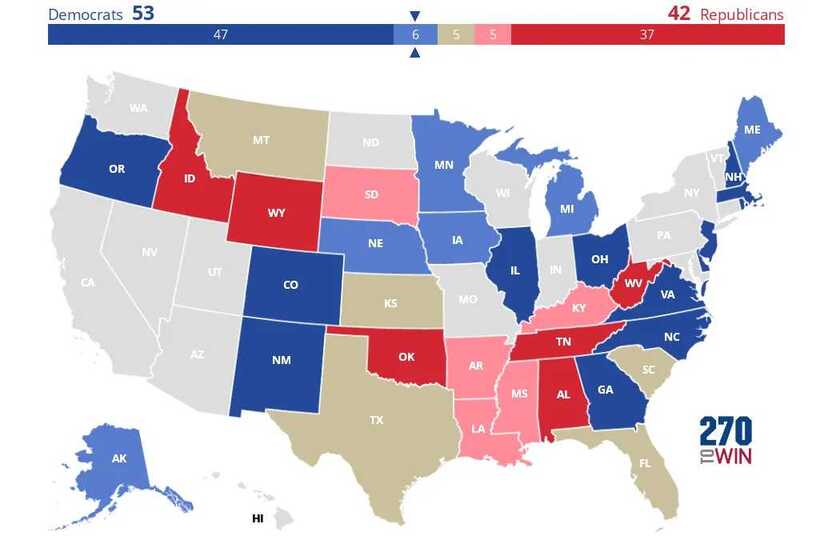
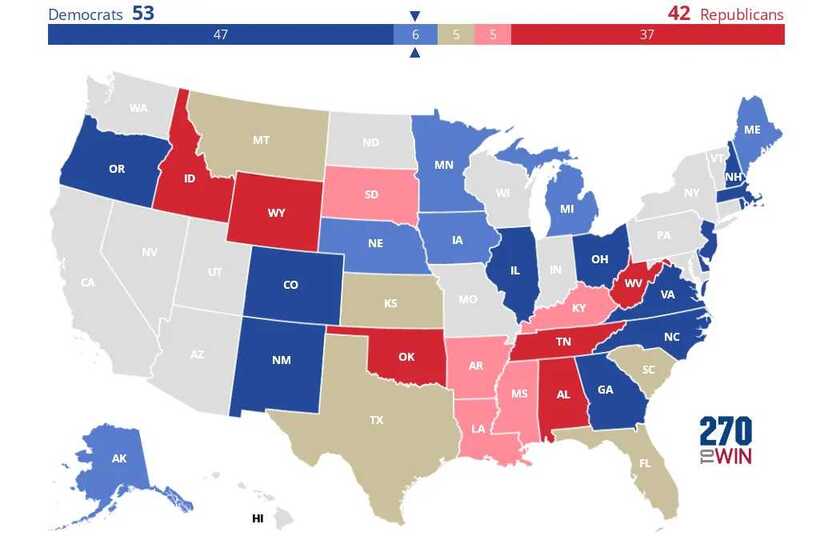
Two conflicting trends dictate the Senate outcome in 2026. The map heavily favors Republicans, as the competitive Senate seats up lean heavily Republican. By contrast, the election context heavily favors Democrats, with war, recession, realignment and scandal tipping in their direction. A deeper dive reveals why prediction markets still likely undersell Democratic prospects.

First, the idea that Senate midterms favor the party out of power in the White House is belied by both recent and a century of history of Senate elections. Unlike the House, only a third of Senate seats face election in any midterm, and that map dictates outcomes unless the election context is particularly bad for the incumbent party.

Consider that the highly unpopular Biden didn’t lost any net Senate seats in 2022 and Trump added Senate seats in the Democratic friendly cycle in 2018. Equally, Clinton didn’t lose net Senate seats in 1998 nor did W. in 2002. Even low-approval election cycles like 1966 and 1982 didn’t produce a big swing in the Senate. Indeed, since 1934, the party in power only lost 10% or more of their Senate seats (4+) less than half of the time. Democrats need a flip of exactly that — at least 4 Senate seats — to retake power in the Senate.

Then take a look at the map, and you can see the reason for optimism in GOP circles and some traders in the prediction markets. Only 2 GOP-held seats are in states Trump won by less than double digits, while 2 Democratic-held seats are in states Trump won, and one of those GOP held seats features a long-time incumbent who typically runs double-digits ahead of the GOP norm (Collins in Maine). This is why the GOP entered the year believing odds of losing the Senate were remote, and the prediction markets mostly concurred.

But this ignores the counter-trend: the degree of election dismay with the incumbent party in the White House, and the reasons for that dismay. Presidential job approval has not been a neat proxy for Senate midterms because it depends on the reason for that dissatisfaction in the electorate. Four factors drive Senatorial midterms: war, recession/cost of living, realignment, and scandal. When two of those four factors are not present and don’t dominate, then the incumbent party’s odds of losing 4+ Senate seats drops to less than 20%. By contrast, when two of those four factors are present and do predominate, then the odds of the incumbent party losing 4+ Senate seats rises to 100%. Indeed, the median number of Senate seats lost when some combination of war, recession, realignment and scandal, are present, the White House party loses at least 8 Senate seats.

A few examples: while FDR added Senate seats in 1934 midterms, he lost 9 in 1938 midterms due to the combination of recession and scandal (trying to stack SCOTUS). 1942 and 1946 gave us war and recession to cost Democrats 8 and 12 Senate seats alike. 1950 gave us war again and scandals concerning the war costing Democrats 5 Senate seats. 1958 gave us recession and scandal, costing Ike 15 Senate seats. While JFK added Senate seats in 1962 and Nixon added Senate seats in 1970, only Watergate and stagflation in 1974 or the combination of Iran Contra and vulnerable class of 1980 incumbents cost the incumbent party 4 or more Senate seats until the realignment election of 1994, where evangelicals shifted their down-ballot voting to the GOP en masse. It took war and scandal in 2006 to see the Senate switch 4+ Senate seats again.

That’s the story of 2026: a very GOP favorable Senate map versus a very Democratic friendly election cycle. The GOP enters election season with all four factor present: war, recession/cost of living, realignment, and scandal. The Iran War was already deeply unpopular, and it’s impact on the economy in gas and diesel prices turns Americans sour on their current economic prospects, as wages fall behind, housing and health care feel increasingly unaffordable, labor force participation continues to drop, the the mirage of AI keeps the GDP just above a technical recession. The Epstein scandal remains one of the worst scandals in American political history, and Trump managed to associate himself deeply with the scandal in his handling of it. Then the realignment, as the new Trump 2024 voters joined the Obama-Trump converts of 2016 in abandoning GOP identity, already evident in surveys and primary participation.

A quintet of voter groups appear to be realigning away from the Republican brand — hispanic voters, black voters, industrial area voters, libertarian-leaning voters, and war-skeptical voters alike. This realigning electorate shows up disproportionately in key Senate contests. The war-skeptical voters in states like Maine, New Hampshire, Ohio, Michigan, Iowa, Montana, Nebraska, and Alaska (these are the states W failed to gain in between 2000 and 2004 due to the Iraq War before it even turned unpopular). The hispanic voters in states like Florida and Texas. The African-American voters in states like North Carolina and Georgia. The industrial voters in Ohio and Michigan. The libertarian leaving voters in states like New Hampshire, Alaska, Texas and Florida.

Thus, many of the states that seem “Safe” on the map are anything but, as their realigning electorates shift back against the Republican brand, with all of them having recent histories in electoral cycles of favoring Democrats or being true swing states. Take states like Florida and Texas where suburban margins began to erode for the GOP in the Trump era but countered that by massive margin shifts in hispanic and black precincts. Primary participation, voter identification, and public opinion surveys show those black and hispanic voters shifting back massively away from the GOP brand, which, given the erosion in some suburban areas and losses with younger generations, makes states Florida and Texas closer to competitive than double-digit leans.

In big swing election cycles, even “safe” Senate seats can suddenly turn razor close, as Bob Dole found out in 1974, barely holding on to his Kansas seat before being the VP nominee two years later. Strong independent candidates in Kansas, Nebraska, South Dakota and Montana may pose a unique threat to GOP held seats, as the Nebraska race in 2024 showed, with Osborn running 17 points ahead of Harris’ margin in the state. Democrats field the much better candidate in Ohio with a proven track record of out-performing Democratic margins in the state, while the Texas GOP nominee faces abandonment from his own party after they spent over $100M bashing him in the state for a disliked party incumbent. Alaska primary results suggest the Democratic nominee already holds the edge in that ranked choice voting state, while the famed cross-over support for Collins in Maine appears to be fading with newer generations taking over the voter rolls. My current map would be as follows, with surprising closer-than-expected races in Montana, Kansas, Louisiana, Florida, Mississippi, South Dakota, South Carolina and Kentucky, and a median map of Democrats holding 53+ Senate seats after the 2026 elections.


If past is prologue, the map won’t save the GOP in 2026, and an ever bigger tsunami may be incoming than anyone in Washington expects.

Read full Article
post photo preview
OFFICIAL PICKS: Midterms, 2026
House Elections Projections
 
The House tends to be more responsive to midterm dynamics, but, like the Senate, swings hard in elections where some combination of the Four Factors are present -- cost of living crisis or recession; war; major scandal; betrayal or down-ballot realignment. A fun map to use is this simulator, which takes partisan averages from existing models, and plugs in the map based on your adjustment of the generic ballot edge for one party or another. https://globalelectionsimulator.com/#/usa-house
 
Historic Norms: When a combination of the Four Factors are present, this is the kind of swing you get:
1930: 52 seat swing
1946: 55 seat swing
1958: 49 seat swing
1974: 49 seat swing
1994: 54 seat swing
2006: 31 seat swing
 
2026 PROJECTIONS


Only for Supporters
To read the rest of this article and access other paid content, you must be a supporter
Read full Article
post photo preview
Barnes Betting Report: Senate 2026

First, four factors dictate whether there is major turnover in the Senate in a midterm election independent of the favorability of the Senate map (due to only one-third of seats being up in any given midterm). Often, as was the case in both 2018 and 2022, is that incumbents are not destined to lose seats, outside of realigning elections in unfavorable maps. This cycle's map favors the GOP, which is why the prediction markets and most forecasters expect a GOP majority in the 2027 Senate. The four factors that prove dangerous to the incumbent party are: first, a recession or cost of living crisis; second, a war; third, a major scandal; and fourth, a sense of betrayal in the voter group that backed the incumbent amongst some portion of their prior electoral coalition. Five midterms feature some combingation of those factors in some significant degree: 1930, 1946, 1958, 1974 and 2006.

Without those factors present in multiple forms, the incumbent party can expect to hold on to seats in states it previously won outside the national margin. When those factors are present, the landscape shifts dramatically. Examining those White House incumbent seats that showed a state-wide election decided by single digits in the prior decade produces the following probabilities: the incumbent White House party lost at least 67% of its incumbent held seats, as much as 85% of its incumbent held seats, and an average of 75% of its incumbent hold seats, rarely upsetting the opposition party in any seat and often losing a surprise or two in seats considered completely safe. 


Only for Supporters
To read the rest of this article and access other paid content, you must be a supporter
Read full Article
See More
Available on mobile and TV devices
google store google store app store app store
google store google store app tv store app tv store amazon store amazon store roku store roku store
Powered by Locals