




Cinderella found her shoe. A big name coach set a dubious record. Torn tickets littered the Sportsbooks' floors and busted brackets swept the office pools. A fun Friday of pure Madness on St. Patty's Day!
Watch: If you want a game with posterized dunks, wild swings, bomb-away threes, falling down shots, and a last-second finish, take in TCU-Arizona State. Live chat cashed on a live bet on the game too!
Recap: Only the 2nd 16-seed to ever win a 1st round game, as little Fairleigh Dickinson took down mighty Purdue, with the Boilermakers head coach now setting a new record: losing to a 13, 15 and 16 seed in the tourney, and doing it in back-to-back-to-back tourneys! Friday favorites went 10-6 against the line, and 13-3 straight up, as the public took a beating like an overdue debtor from Tony with the bat. Sportsbooks cleaned up, as the public's favorite dogs -- VCU, Drake, and Kent St. lost against the # -- and the public's favorite favorites (Memphis & Gonzaga) failed to cover or lost outright. Through the 1st round, 25 higher seeds prevailed, and 23 Vegas favorites won outright. Including the First Four, favorites are 20-16 against the number, with 11 dogs winning outright, a little low by historic metrics, but close to the norm. A 10, 11, 13, 15 and 16 seed all still made it to the 2nd round, as did two 9 seeds.
Preview: At least 2 low seeds will make the Sweet-16, as they play each other in the 2nd round. Public betting heaviest on Auburn, Princeton & Duke. Sharp $ on Furman & under in the Duke-Tennessee matchup. By historic metrics for seeds and Vegas lines, the spreads in the Houston & Kansas games are very low, while the rest are in accord with the norm. Friday's 8 games features 6 games with 1 or 2 seeds (or their upset replacement). While Penn State could give a double-digit seed a Sweet 16 birth with a win, the Princeton-Missouri matchup guarantees a 7 seed or lower will make the Sweet 16. The rest of the Cinderellas wait for Sunday.
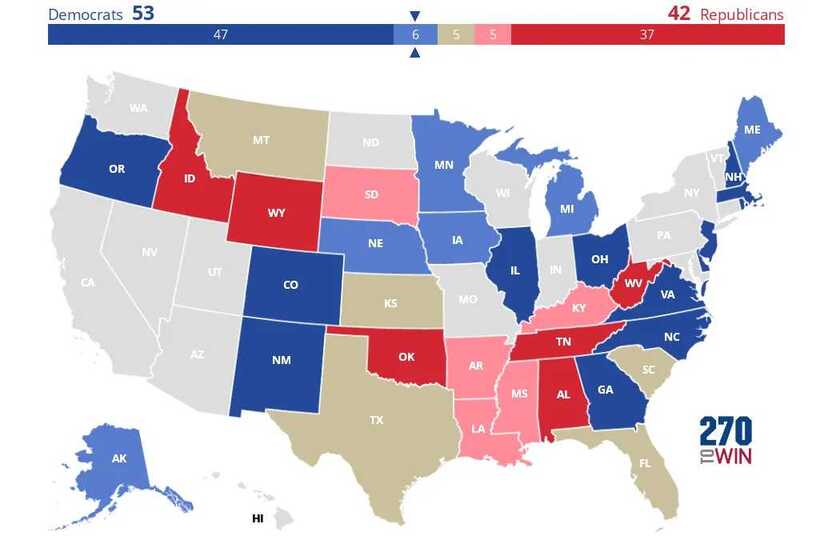
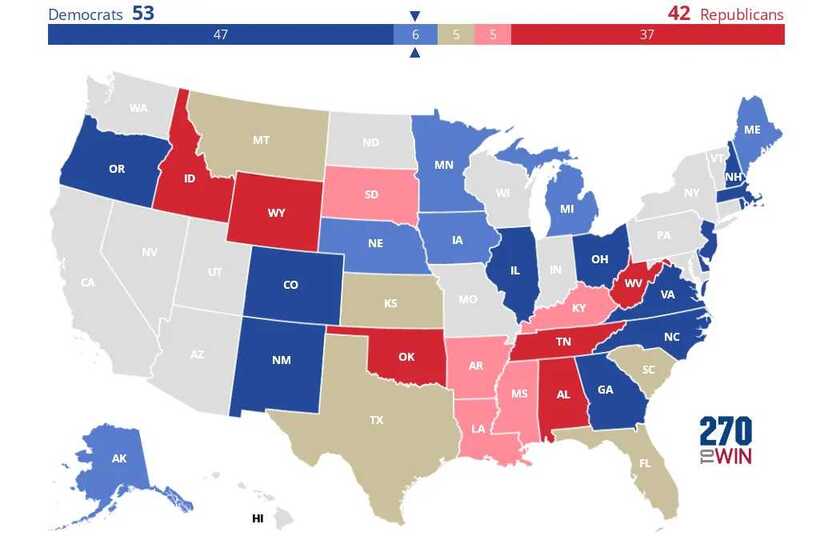
First, four factors dictate whether there is major turnover in the Senate in a midterm election independent of the favorability of the Senate map (due to only one-third of seats being up in any given midterm). Often, as was the case in both 2018 and 2022, is that incumbents are not destined to lose seats, outside of realigning elections in unfavorable maps. This cycle's map favors the GOP, which is why the prediction markets and most forecasters expect a GOP majority in the 2027 Senate. The four factors that prove dangerous to the incumbent party are: first, a recession or cost of living crisis; second, a war; third, a major scandal; and fourth, a sense of betrayal in the voter group that backed the incumbent amongst some portion of their prior electoral coalition. Five midterms feature some combingation of those factors in some significant degree: 1930, 1946, 1958, 1974 and 2006.
Without those factors present in multiple forms, the incumbent party can expect to hold on to seats in states it previously won outside the national margin. When those factors are present, the landscape shifts dramatically. Examining those White House incumbent seats that showed a state-wide election decided by single digits in the prior decade produces the following probabilities: the incumbent White House party lost at least 67% of its incumbent held seats, as much as 85% of its incumbent held seats, and an average of 75% of its incumbent hold seats, rarely upsetting the opposition party in any seat and often losing a surprise or two in seats considered completely safe.