




What's Up Folks?!?! For those of you NEW to the World of Online Sports Betting (or Sports Betting in general), here is a MasterClass video showing you how to navigate through a couple of the more popular online Sportsbooks. It's VERY IMPORTANT that your Book is EASY for you to use and understand!! You want to be able to bet on WHAT YOU WANT, WHEN YOU WANT!! Having a site with an EASY-TO-USE Web Interface and MOBILE APP is CRITICAL!! Aside from the obvious... Having an easy-to-use Sportsbook simply makes Sports Betting LESS FRUSTRATING on a daily basis, and MORE ENJOYABLE OVERALL!! Also, knowing how to use multiple Sportsbooks gives you the opportunity to LINE SHOP, and find the BEST ODDS AVAILABLE for your wagers!! You lose VALUE if you aren't taking the MOST PROFITABLE odds available on your picks, and they will often vary on different sites (Sometimes by A LOT). We NEVER want to cost ourselves VALUE in ANY SPOT if we can help it!! Hope you all enjoy this... Feel free to drop ANY questions in the comments below, and we'll make sure to get back to ya as soon as possible to get it cleared up for you!! Until Next Time... Good Luck and Good Gamblin!!!!
-Crickett
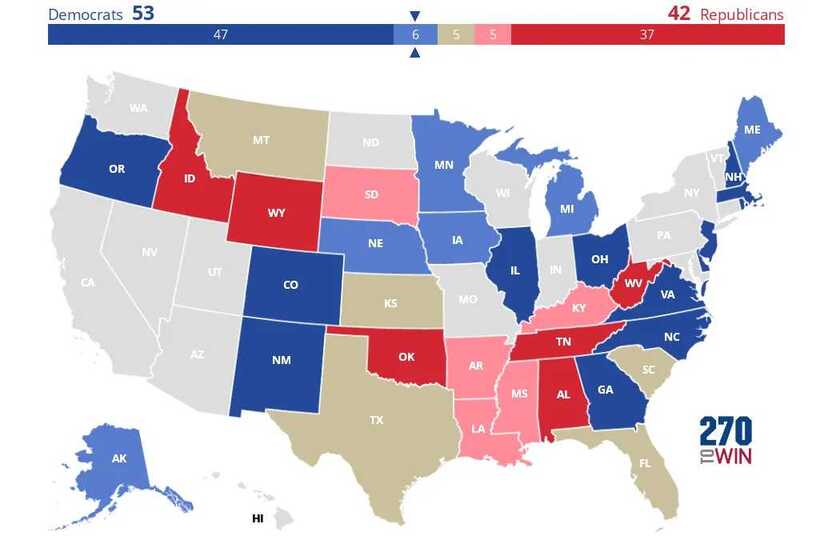
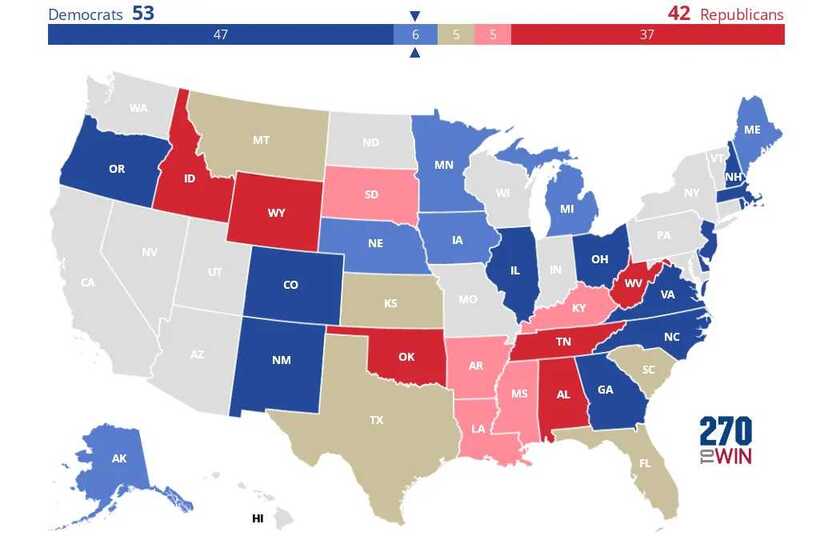
First, four factors dictate whether there is major turnover in the Senate in a midterm election independent of the favorability of the Senate map (due to only one-third of seats being up in any given midterm). Often, as was the case in both 2018 and 2022, is that incumbents are not destined to lose seats, outside of realigning elections in unfavorable maps. This cycle's map favors the GOP, which is why the prediction markets and most forecasters expect a GOP majority in the 2027 Senate. The four factors that prove dangerous to the incumbent party are: first, a recession or cost of living crisis; second, a war; third, a major scandal; and fourth, a sense of betrayal in the voter group that backed the incumbent amongst some portion of their prior electoral coalition. Five midterms feature some combingation of those factors in some significant degree: 1930, 1946, 1958, 1974 and 2006.
Without those factors present in multiple forms, the incumbent party can expect to hold on to seats in states it previously won outside the national margin. When those factors are present, the landscape shifts dramatically. Examining those White House incumbent seats that showed a state-wide election decided by single digits in the prior decade produces the following probabilities: the incumbent White House party lost at least 67% of its incumbent held seats, as much as 85% of its incumbent held seats, and an average of 75% of its incumbent hold seats, rarely upsetting the opposition party in any seat and often losing a surprise or two in seats considered completely safe.