




DISCOUNT CODE: FOOTBALL
Get an annual membership for half-off for the next 72 hours through Monday, August 5th! Type in the Discount Code: FOOTBALL (FOOTBALL must be in all caps).
What do you get? The best value for sports picks anywhere, with less ten cents per pick when most pick services costs hundred times that. Indeed, you get more than 2000 picks annually on NFL, College Football, European Football, American Elections, NBA, College Basketball & more; you get all the masterclasses; you get insights, strategies, and Q&As with Betting w/ Barnes on Fridays throughout the fall; and you get to chat with a community full of the smartest and most fun sports investors, election gamblers, and political prognosticators anywhere! Oh, and we usually make money more often than not, with the average member paying off their subscription fee many times over each year.
MiracleManDan's AI Baseball 7/6/24
Experimental
Reviewing today's MLB output and snapshots to explain the value plays
Today's MLB slate from outputs/mlb/bets-2026-07-06.csv is F5 moneyline (contest=F5, type=MONEY). The model blends form/Poisson with the trained LightGBM and only assigns units when a pick matches one of the three backtested F5 angles in the manifest — not merely when edge is positive.
Official value play (1 unit)
St. Louis Cardinals F5 ML -110 (DraftKings) — 7:46 PM ET vs Milwaukee
Model win prob
55.4%
Fair line
-124
Edge
+3.0%
Units
1
This is the only play that cleared the angle gate today. It fits home_pick_sp_ok_home_brand_adv: home side, starter not much worse than the opponent (sp_era_delta < 1), and a meaningful home brand edge (brand_delta ≥ 0.15). At ~3% edge, the confidence scaler lands at 1 unit (max is 5 at ~15% edge).
Positive edge, but no bet (0 units)
These games had model edge on the best F5 side, but didn't match any promoted angle, so they export for context only:
PickLineEdgeWhy it's not a...
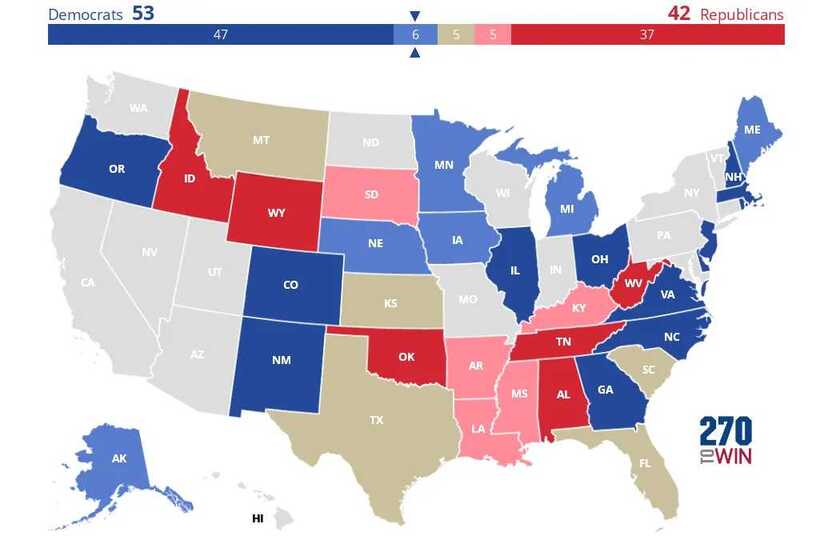
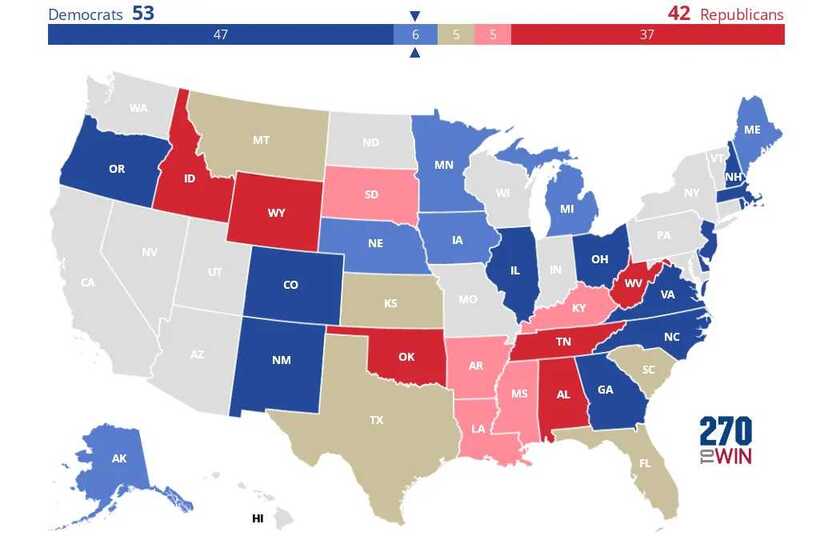
First, four factors dictate whether there is major turnover in the Senate in a midterm election independent of the favorability of the Senate map (due to only one-third of seats being up in any given midterm). Often, as was the case in both 2018 and 2022, is that incumbents are not destined to lose seats, outside of realigning elections in unfavorable maps. This cycle's map favors the GOP, which is why the prediction markets and most forecasters expect a GOP majority in the 2027 Senate. The four factors that prove dangerous to the incumbent party are: first, a recession or cost of living crisis; second, a war; third, a major scandal; and fourth, a sense of betrayal in the voter group that backed the incumbent amongst some portion of their prior electoral coalition. Five midterms feature some combingation of those factors in some significant degree: 1930, 1946, 1958, 1974 and 2006.
Without those factors present in multiple forms, the incumbent party can expect to hold on to seats in states it previously won outside the national margin. When those factors are present, the landscape shifts dramatically. Examining those White House incumbent seats that showed a state-wide election decided by single digits in the prior decade produces the following probabilities: the incumbent White House party lost at least 67% of its incumbent held seats, as much as 85% of its incumbent held seats, and an average of 75% of its incumbent hold seats, rarely upsetting the opposition party in any seat and often losing a surprise or two in seats considered completely safe.