




Once again, My guy Elio & myself were fortunate enough to have WR Carl Smith Jr. from Robert Morris University, join us for our show "The Unscripted Sportscast" last night!! The pleasure was ALL OURS, as he took time out of his busy schedule to sit down with us & talk some Football!! He shares his journey, from a kid growing up in Darby Township, PA to HIDDEN GEM in the upcoming 2025 NFL Draft!! This is another young man with a VERY BRIGHT FUTURE ahead of him & we want to WISH HIM NOTHING BUT THE BEST!! Continue to grind it out with your INCREDIBLE WORK ETHIC, always remain a STUDENT OF THE GAME, lean on that DYNAMIC SUPPORT SYSTEM, & continue to STAY HUMBLE... and I have no doubt we'll see you playing on Sundays in the Fall!! Thank You so much for taking the time to come on the show. It's VERY MUCH APPRECIATED & You're welcome ANYTIME!! Good Luck in ALL YOU DO on & off the field!! KEEP AN EYE OUT FOLKS!! Mr. Smith is coming to an NFL Franchise near you!!!!
Peruvian Presidential election fun!
It’s a 26,959 vote lead for Sanchez w/97.032% of ballots counted/reported. He had been steadily up around 40K votes for majority of the last 2% of the count, it’s razor close, so I don’t understand how they can have Fujimori at 95% odds 🤷♂️
If I had more liquidity on Kalshi I’d buy more Keiko NO contracts.
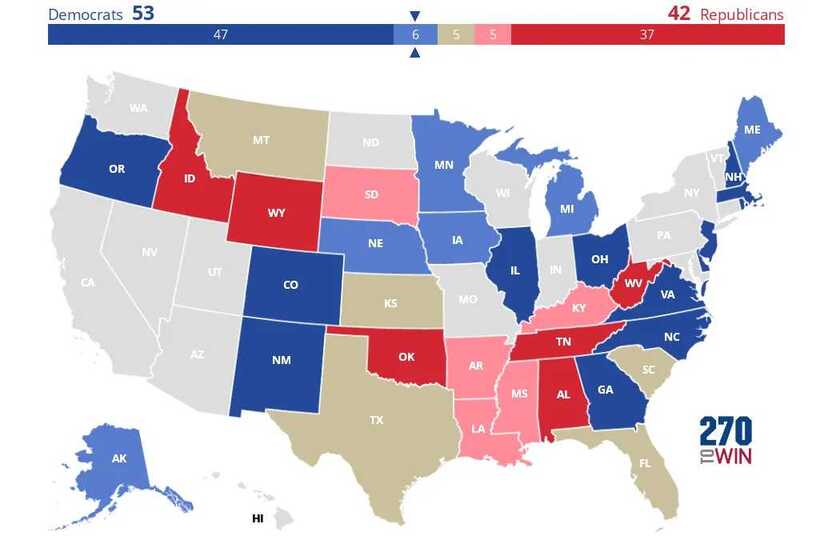
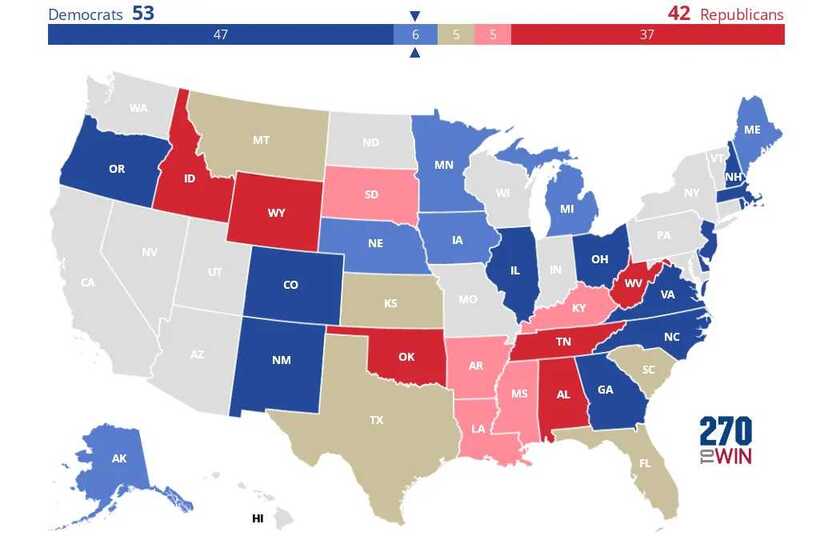
First, four factors dictate whether there is major turnover in the Senate in a midterm election independent of the favorability of the Senate map (due to only one-third of seats being up in any given midterm). Often, as was the case in both 2018 and 2022, is that incumbents are not destined to lose seats, outside of realigning elections in unfavorable maps. This cycle's map favors the GOP, which is why the prediction markets and most forecasters expect a GOP majority in the 2027 Senate. The four factors that prove dangerous to the incumbent party are: first, a recession or cost of living crisis; second, a war; third, a major scandal; and fourth, a sense of betrayal in the voter group that backed the incumbent amongst some portion of their prior electoral coalition. Five midterms feature some combingation of those factors in some significant degree: 1930, 1946, 1958, 1974 and 2006.
Without those factors present in multiple forms, the incumbent party can expect to hold on to seats in states it previously won outside the national margin. When those factors are present, the landscape shifts dramatically. Examining those White House incumbent seats that showed a state-wide election decided by single digits in the prior decade produces the following probabilities: the incumbent White House party lost at least 67% of its incumbent held seats, as much as 85% of its incumbent held seats, and an average of 75% of its incumbent hold seats, rarely upsetting the opposition party in any seat and often losing a surprise or two in seats considered completely safe.