


Miracle Man Dan's Belmont 2025
“You makes your bets, you takes your chances” - Attributed to Luis Landaeta by Grok (see below)
40 years. That’s how long it’s been since the only question you needed to ask at the Belmont was “What number is the Woody Stephens horse?” My first year at the Stakes was 1981, one year before Woody’s great run, and the year Summing beat Pleasant Colony, the odds-on favorite to win the Triple Crown. I cashed a nice ticket by betting on the fastest horse in the race. My two buddies caught Triple Crown Fever and plunged their entire bankroll onto the “sure thing”. I got stuck with a pretty hefty dinner tab, but what the hell.
Belmont at Saratoga? Mon dieux! Nothing against the Spa, even money against Santa Anita as the best the Sport of Kings has to offer, but I for one will be glad when it’s back to Long Island next year, and more importantly, back to a mile and a half. The race has to be shortened to 1 1/4 to accomodate the shorter oval they built up north.
Hate the race. Would normally be a clear pass. #7 Journalism won the Derby just like he was supossed to. He’s supposed to do it again.
It is the Belmont, so we’ll dig a little deeper. #6 Baeza ran second in the Santa Anita and third in the Derby, where we can give him a bit of an excuse being stuck way out wide the whole trip and still moving the fastest at the end. Wish we had that extra quarter mile, but let’s see if Flavian Pratt cen get him up this time.
6 to Win and Place.
Exacta Box 6-7.
Answer from Grok, clearly a hallucination as I was in a conversation about the race.
The quote “You makes your bets, you takes your chances” is famously associated with the 1981 Belmont Stakes, where Summing upset the favored Pleasant Colony. It was reportedly said by Luis Landaeta, the exercise rider for Summing, in a post-race interview, capturing the gamble and triumph of their victory. The phrase reflects the risk and reward inherent in horse racing, especially in Summing’s unexpected win, paying $13.60 to win. While the exact wording may vary slightly in retellings, it’s a well-known quip from that race’s lore, as noted in sources like the BloodHorse and racing archives.
🔥 June 21, 2026 Degenerate Special 🔥
Afternoon slate locked with high-K arms! 🔥
Your Locked Open Bets (placed & pending):
1. 3-Leg Parlay — Odds: +121
• Chase Burns 6+ Strikeouts (-440) — CIN Reds @ NY Yankees 1:36 PM ET
• Dylan Cease 6+ Strikeouts (-275) — TOR Blue Jays @ CHC Cubs 2:21 PM ET
• Logan Gilbert 6+ Strikeouts (-310) — BOS Red Sox @ SEA Mariners 4:11 PM ET
2. 5-Leg Parlay — Odds: +200
• Chase Burns 6+ Strikeouts (-420) — CIN @ NYY 1:36 PM ET
• Logan Webb 4+ Strikeouts (-900) — SF Giants @ MIA Marlins 1:41 PM ET
• Dustin May 4+ Strikeouts (-500) — STL Cardinals @ KC Royals 2:11 PM ET
• Dylan Cease 6+ Strikeouts (-275) — TOR @ CHC 2:21 PM ET
• Logan Gilbert 6+ Strikeouts (-300) — BOS @ SEA 4:11 PM ET
Single Bet
• Dylan Cease Over 6.5 Strikeouts (-132) — TOR @ CHC 2:21 PM ET
#MLBProps #StrikeoutBets #DegenerateMode 🤑⚾
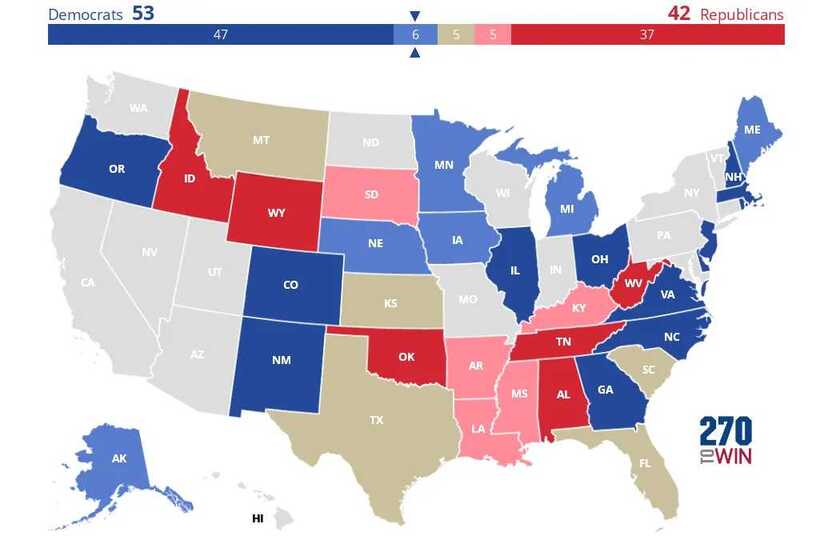
First, four factors dictate whether there is major turnover in the Senate in a midterm election independent of the favorability of the Senate map (due to only one-third of seats being up in any given midterm). Often, as was the case in both 2018 and 2022, is that incumbents are not destined to lose seats, outside of realigning elections in unfavorable maps. This cycle's map favors the GOP, which is why the prediction markets and most forecasters expect a GOP majority in the 2027 Senate. The four factors that prove dangerous to the incumbent party are: first, a recession or cost of living crisis; second, a war; third, a major scandal; and fourth, a sense of betrayal in the voter group that backed the incumbent amongst some portion of their prior electoral coalition. Five midterms feature some combingation of those factors in some significant degree: 1930, 1946, 1958, 1974 and 2006.
Without those factors present in multiple forms, the incumbent party can expect to hold on to seats in states it previously won outside the national margin. When those factors are present, the landscape shifts dramatically. Examining those White House incumbent seats that showed a state-wide election decided by single digits in the prior decade produces the following probabilities: the incumbent White House party lost at least 67% of its incumbent held seats, as much as 85% of its incumbent held seats, and an average of 75% of its incumbent hold seats, rarely upsetting the opposition party in any seat and often losing a surprise or two in seats considered completely safe.