




As some may have seen, a trio of late GOP-leaning pollsters found Jones tied or with a slight lead, after media polls with a big Democratic bias uniformly showed a major lead for the GOP candidate. Does this change my mind? Nope. Here's why below.
First, all three pollsters are really just average -- Trafalgar, Insider Advantage, and Quantus -- while the 4th, Emerson, has had a slight Democratic lean. I trust none of them in the way I trust Baris.
Second, a sneak peak within their numbers shows the Jones surge is entirely assuming low propensity Democrats -- minority voters & very young voters -- will flood the polls. I see no evidence of that in the early voting data and remain suspect of it. Even these polls showing a close race for AG have a massive GOP lead for AG amongst the high propensity voter groups.
Third, even these polls show the Democratic AG with a very low approval rating, and a very high risk voters just leave that part of the ballot blank, as long time Virginia Democratic vote analysts have also forecast for that race.
Fourth, the early voting data in Virginia is actually far less Democratic trending than the New Jersey or NYC early voting data, as the electorate is actually more GOP than either 2021 or even 2024 in Virginia.
Fifth, and finally, I am trusting my instinctual read on the electorate, which even these polls actually confirm -- independent voters overwhelmingly favor the GOP candidate for Attorney General, the key voter group in Virginia.
Of note: due to these late polls, you can know get the best odds on the race, including new markets where you can take the GOP candidate to win between 0 & 6, and you can double up your money, or the best odds would be the GOP candidate to win 0 to 2 for better than 5 to 1.
As always, there is no such thing as a guarantee in life, and always risk in elections, but my odds still have the GOP candidate as a strong favorite way above the current market odds.
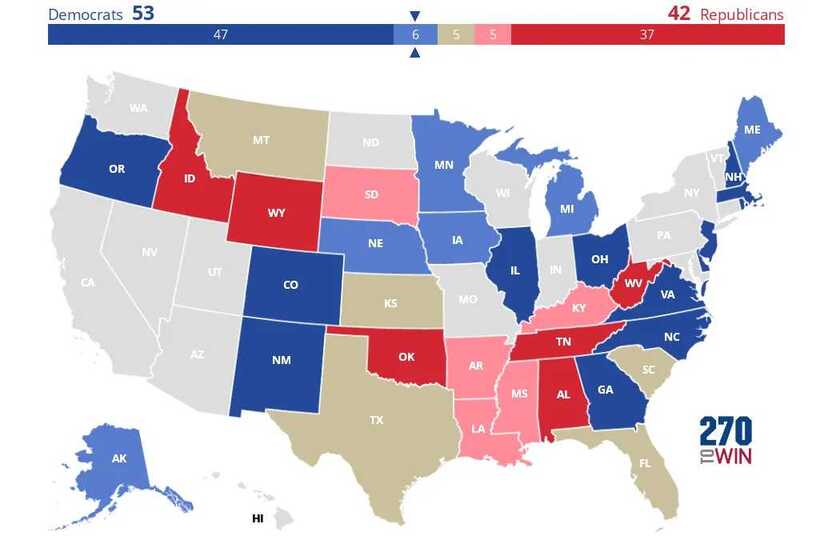
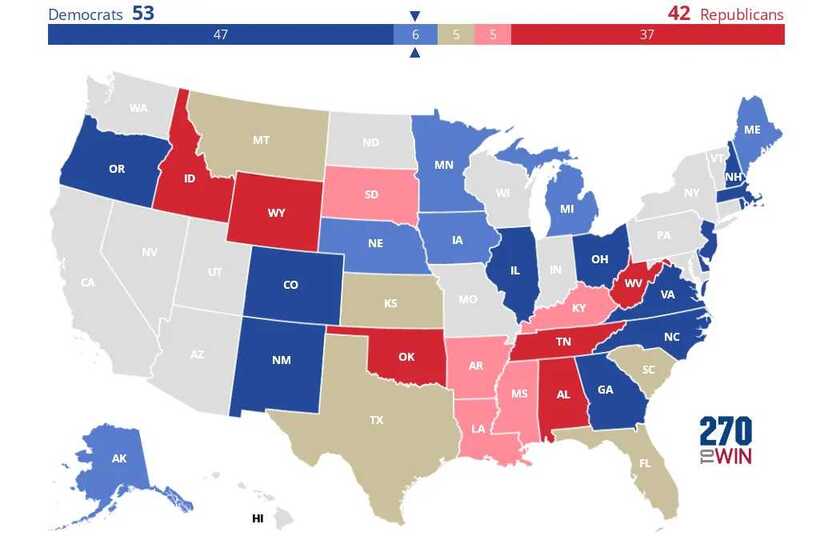
First, four factors dictate whether there is major turnover in the Senate in a midterm election independent of the favorability of the Senate map (due to only one-third of seats being up in any given midterm). Often, as was the case in both 2018 and 2022, is that incumbents are not destined to lose seats, outside of realigning elections in unfavorable maps. This cycle's map favors the GOP, which is why the prediction markets and most forecasters expect a GOP majority in the 2027 Senate. The four factors that prove dangerous to the incumbent party are: first, a recession or cost of living crisis; second, a war; third, a major scandal; and fourth, a sense of betrayal in the voter group that backed the incumbent amongst some portion of their prior electoral coalition. Five midterms feature some combingation of those factors in some significant degree: 1930, 1946, 1958, 1974 and 2006.
Without those factors present in multiple forms, the incumbent party can expect to hold on to seats in states it previously won outside the national margin. When those factors are present, the landscape shifts dramatically. Examining those White House incumbent seats that showed a state-wide election decided by single digits in the prior decade produces the following probabilities: the incumbent White House party lost at least 67% of its incumbent held seats, as much as 85% of its incumbent held seats, and an average of 75% of its incumbent hold seats, rarely upsetting the opposition party in any seat and often losing a surprise or two in seats considered completely safe.