SportsPicks
Politics • Investing & Finance • Sports
All your sports information for those investing Vegas-style in the outcomes of sports games. Predicting games against the line in all sports, especially football, American and English style.
Interested? Want to learn more about the community?

Premier League 13th of September 2026 - My Pick

1% Manchester City not to win vs Manchester United at 55c (good to 60c)

Today is the first Manchester Derby after Pep Guardiola left Manchester City. This is Michael Carrick's second Manchester Derby although his first one was as a caretaker manager in January, a 2-0 for Manchester United. Enzo Maresca is City's manager today. Like many derbies, the Manchester Derby is more even than the underlying power ratings for each team would suggest at the time. There have certainly been blowouts in this fixture, but there have also been plenty of times that the weaker team on paper has come out and scored a big win. During the Fergie era, Manchester City could never be counted out, even if they were on diabolical form going into it. During the Pep era, United at times had a manager that was able to exploit the weakness of a Pep fluid positional based system, and that is playing tight and hitting them on transitions. Despite some heavy defeats for United during Pep's time at City, the record isn't so lopsided.

Today we have a whole new game between the two sides and the question we turn to is how similar will this game play out to past fixtures. The tactical identities of these two teams are remarkably typical right now to the last decade. Manchester United under Michael Carrick play a game based around possession and quick transitions, which even through different managerial philosophies has been the general way they've played going all the way back to the 1980s under Fergie. Manchester City play a very similar style to Pep under Marseca, who was Pep's assistant at City for a while and so whose style is heavily influenced by Pep. One of the significant differences is that Pep's positional system was more fluid, allowing players to rotate their positions a lot, whereas Marseca's system is more explicitly positional qua position, using the zones players occupy to maintain territorial control over where the ball is and where the ball is going.

While Pep was manager of City, the game normally played out one of two ways. Either City would get their passing game going, they'd stretch United and find an opening or they exploit their gaps when they commit too many men forward, or United would be very disciplined in defence, wait for City to lose possession of the ball high up the pitch and then hit them on the break before they can get their defence back enough to negate the pace of the break. The latter is not far from how United operate under Michael Carrick. What is different about City is they no longer have Rodri and Bernardo Silva to maintain their possession based game. Neither of those players were extraordinarily physical, but as they showed for Spain in the World Cup, you don't have to be extraordinarily physical to maintain possession, control the tempo of the game and let the ball do the work. Their replacements are Elliot Anderson and Enzo Fernández, with Ayyoub Bouaddi added to the mix as well.

What I would note about Anderson and Fernández is they are a newer profile of very physical, press resistant midfielders that are very strong all rounders but are not extraordinarily technical compared to the elite midfielders of recent eras. They are a type of midfielder that commands over £100M in the current market precisely because they are extremely versatile in being able to elevate the level of almost any midfield they're placed into. The flip side is that they are not necessarily going to take a midfield with a particular blind spot and make it complete. In other words, the midfields they play in have a much higher floor but not necessarily a much higher ceiling.

One of the patterns I have noticed with United over the past decade is that even though they have gone through some rough times, they remained surprisingly competitive against Chelsea. Part of this is Chelsea's own managerial churn but United's vulnerability has more been towards system teams like Liverpool and at certain times City. Against teams like Chelsea that have high talent levels in midfield, they tend to still do well because when Chelsesa don't control the game, United have more opportunities to bypass the midfield. Even with Enzo Fernández and Moises Caicedo, United have had an edge in head to head. So with City's midfield looking more like a hybrid of Pep's City and Maresca's Chelsea, I think this is the kind of game where the fair odds are closer than the half a goal implied by the betting markets.


Interested? Want to learn more about the community?
What else you may like…
Videos
Podcasts
Posts
Articles
Barnes Brothers: European Soccer Preview
00:54:00
Master Class: Prediction Markets vs Sportsbooks

In this edition of "Master Class", we're gonna look at Prediction Markets vs Sportsbooks, and why the Prediction Markets are the Future of Sports Betting!! Come join us, as we try to provide you with all the tools to STACK YOUR NICKELS TO THE CEILING!! Feel Free to drop any questions you have in the comments!! Hope This Helps My Friends!! Good Luck, Good Gamblin, & Have The Day You Deserve!!

-Crickett

00:51:21
Barnes Brothers: European Soccer MEGA Preview
01:08:49
SEC Preview Podcast

A full breakdown of every team in the SEC, including talent analysis, coordinator concern, and schedule forecasts, with win total expectations. Enjoy!

SEC Preview Podcast
Smokehouse Mike's NCAAB

March Madness final four recap and Championship preview...

Smokehouse Mike's NCAAB
Smokehouse Mike's NBA
LIVE CHAT FOR 2026

Now open!

LIKELY PICKS: Soccer, Weekend of October 15-18, 2026

Posting to get feedback.

2% CRYSTAL PALACE +0.5 Lyon 56%
2% CELTA VIGO +0.5 Juventus 54%
2% VENEZIA +0.5 Napoli 42%
2% BOLOGNA +0.5 InterMilan 38%
2% GENOA +1.5 Roma 56%
2% FIORENTINA +0.5 Como 53%
2% UNION BERLIN +0.5 Dortmund 40%
2% LEIPZIG +2.5 Bayern Munich 57%
2% ESPANYOL +0.5 Atletico 43%
2% BETIS +1.5 Barcelona 54%
2% VALENCIA +0.5 Bilbao 55%
2% FULHAM Win Hull City 55%
2% NEWCASTLE Win Aston Villa 43%
2% FOREST +0.5 Arsenal 39%
2% STRASBOURG +1.5 PSG 55%
2% ANGERS +0.5 Marseille 53%
2% LORIENT +0.5 Monaco 52%
2% WATFORD Win Charlton 39%
2% DERBY Win Stoke 37%

Champions League 14th of October - My Pick

2% Roma not to lose vs Real Madrid at 50c (good to 56c)

After drawing with Fenerbahçe in Turkey in their first Champions League game under Gian Piero Gasperini, Roma are at home to Real Madrid, who are managed by José Mourinho for the second time. Real Madrid under Mourinho play a transitional style with Kylian Mbappé, Vinícius Júnior and Jude Bellingham given a lot of freedom to express their talents. Roma under Gasperini deploy a positional style with man orientated marking. How these styles interact will be crucial to how this game resolves.

As I noted in the writeup on Real Madrid's defeat to Atlético Madrid in La Liga, Mbappé and Vinícius Júnior drifting into the same space on the left has been a recurrent issue for Real Madrid this season. Under most circumstances, this is not an especially big issue as they and Bellingham have enough individual talent to find space around the defenders on that flank. Diego Simeone had his ...

September 14, 2026
post photo preview
Barnes Betting Report: Monday Night Football
Chiefs-Broncos
 
REB Power Ratings
CHIEFS: 7 points better than average
BRONCOS 3 points better than average
Home edge for KC: +2.5
REB Spread: Chiefs by 6.5
REB Moneyline: Chiefs 67%
REB Total: 41
PFF Talent: Favors Chiefs on both sides of the ball
 
Situational Analysis
Coaching: Reid is one of the best ever as is Spags, whereas Payton gives up playcalling for the Broncos and Joseph has had some erratic spots in his career. 
Key Market Trends: Chiefs as 3 points or less: 70% cover rate; Reid has a 65% success rate against the spread in week 1; Nix average QB rating on road is 85 while Mahomes exceeds 100 at home; Denver’s offense against top-5 defenses on the road scores a median of 17 points while Chiefs offense under Mahomes is 27. Public tickets favor the Broncos by a 2 to 1 margin. 
 
Talent according to PFF
Players I expect to have 70+ ratings this season, using PFF's past season grades and match for scheme...
 
Chiefs Defense
CB SNEED
CB WILLIAMS
S ROLAND-WALLACE
S GILMAN
LB TRANQUILL 
LB BOLTON
LB COLTRANE
DE KARLAFTIS
DT JONES
 
Broncos Offense
LT BOLLES
RG MEINERZ
RT MCGLICNHEY
TE ENGRAM
WR WADDLE
WR SUTTON
QB NIX
 
Chiefs Offense
C HUMPHREY
G SMITH
WR WORTHY
WR RICE
RB WALKER
QB MAHOMES
TE KELCE
 
Broncos Defense
S HUFANGA
CB SURTAIN
DE BONITTO
DT JONES
DE ELLISS


Read full Article
post photo preview
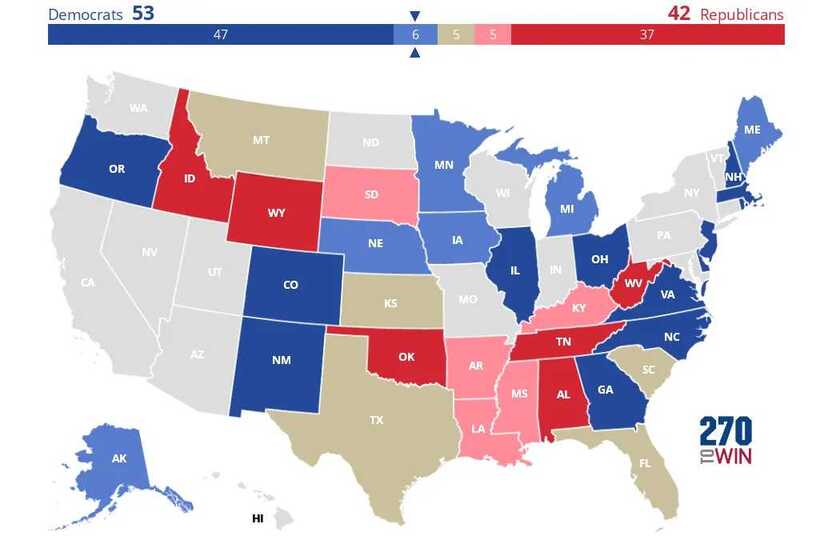
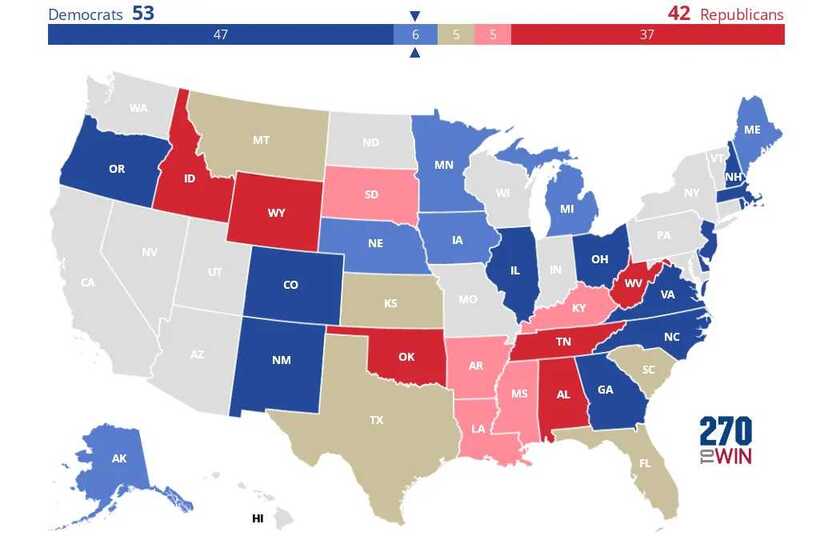
Forecasting the Senate in 2026

Two conflicting trends dictate the Senate outcome in 2026. The map heavily favors Republicans, as the competitive Senate seats up lean heavily Republican. By contrast, the election context heavily favors Democrats, with war, recession, realignment and scandal tipping in their direction. A deeper dive reveals why prediction markets still likely undersell Democratic prospects.

First, the idea that Senate midterms favor the party out of power in the White House is belied by both recent and a century of history of Senate elections. Unlike the House, only a third of Senate seats face election in any midterm, and that map dictates outcomes unless the election context is particularly bad for the incumbent party.

Consider that the highly unpopular Biden didn’t lost any net Senate seats in 2022 and Trump added Senate seats in the Democratic friendly cycle in 2018. Equally, Clinton didn’t lose net Senate seats in 1998 nor did W. in 2002. Even low-approval election cycles like 1966 and 1982 didn’t produce a big swing in the Senate. Indeed, since 1934, the party in power only lost 10% or more of their Senate seats (4+) less than half of the time. Democrats need a flip of exactly that — at least 4 Senate seats — to retake power in the Senate.

Then take a look at the map, and you can see the reason for optimism in GOP circles and some traders in the prediction markets. Only 2 GOP-held seats are in states Trump won by less than double digits, while 2 Democratic-held seats are in states Trump won, and one of those GOP held seats features a long-time incumbent who typically runs double-digits ahead of the GOP norm (Collins in Maine). This is why the GOP entered the year believing odds of losing the Senate were remote, and the prediction markets mostly concurred.

But this ignores the counter-trend: the degree of election dismay with the incumbent party in the White House, and the reasons for that dismay. Presidential job approval has not been a neat proxy for Senate midterms because it depends on the reason for that dissatisfaction in the electorate. Four factors drive Senatorial midterms: war, recession/cost of living, realignment, and scandal. When two of those four factors are not present and don’t dominate, then the incumbent party’s odds of losing 4+ Senate seats drops to less than 20%. By contrast, when two of those four factors are present and do predominate, then the odds of the incumbent party losing 4+ Senate seats rises to 100%. Indeed, the median number of Senate seats lost when some combination of war, recession, realignment and scandal, are present, the White House party loses at least 8 Senate seats.

A few examples: while FDR added Senate seats in 1934 midterms, he lost 9 in 1938 midterms due to the combination of recession and scandal (trying to stack SCOTUS). 1942 and 1946 gave us war and recession to cost Democrats 8 and 12 Senate seats alike. 1950 gave us war again and scandals concerning the war costing Democrats 5 Senate seats. 1958 gave us recession and scandal, costing Ike 15 Senate seats. While JFK added Senate seats in 1962 and Nixon added Senate seats in 1970, only Watergate and stagflation in 1974 or the combination of Iran Contra and vulnerable class of 1980 incumbents cost the incumbent party 4 or more Senate seats until the realignment election of 1994, where evangelicals shifted their down-ballot voting to the GOP en masse. It took war and scandal in 2006 to see the Senate switch 4+ Senate seats again.

That’s the story of 2026: a very GOP favorable Senate map versus a very Democratic friendly election cycle. The GOP enters election season with all four factor present: war, recession/cost of living, realignment, and scandal. The Iran War was already deeply unpopular, and it’s impact on the economy in gas and diesel prices turns Americans sour on their current economic prospects, as wages fall behind, housing and health care feel increasingly unaffordable, labor force participation continues to drop, the the mirage of AI keeps the GDP just above a technical recession. The Epstein scandal remains one of the worst scandals in American political history, and Trump managed to associate himself deeply with the scandal in his handling of it. Then the realignment, as the new Trump 2024 voters joined the Obama-Trump converts of 2016 in abandoning GOP identity, already evident in surveys and primary participation.

A quintet of voter groups appear to be realigning away from the Republican brand — hispanic voters, black voters, industrial area voters, libertarian-leaning voters, and war-skeptical voters alike. This realigning electorate shows up disproportionately in key Senate contests. The war-skeptical voters in states like Maine, New Hampshire, Ohio, Michigan, Iowa, Montana, Nebraska, and Alaska (these are the states W failed to gain in between 2000 and 2004 due to the Iraq War before it even turned unpopular). The hispanic voters in states like Florida and Texas. The African-American voters in states like North Carolina and Georgia. The industrial voters in Ohio and Michigan. The libertarian leaving voters in states like New Hampshire, Alaska, Texas and Florida.

Thus, many of the states that seem “Safe” on the map are anything but, as their realigning electorates shift back against the Republican brand, with all of them having recent histories in electoral cycles of favoring Democrats or being true swing states. Take states like Florida and Texas where suburban margins began to erode for the GOP in the Trump era but countered that by massive margin shifts in hispanic and black precincts. Primary participation, voter identification, and public opinion surveys show those black and hispanic voters shifting back massively away from the GOP brand, which, given the erosion in some suburban areas and losses with younger generations, makes states Florida and Texas closer to competitive than double-digit leans.

In big swing election cycles, even “safe” Senate seats can suddenly turn razor close, as Bob Dole found out in 1974, barely holding on to his Kansas seat before being the VP nominee two years later. Strong independent candidates in Kansas, Nebraska, South Dakota and Montana may pose a unique threat to GOP held seats, as the Nebraska race in 2024 showed, with Osborn running 17 points ahead of Harris’ margin in the state. Democrats field the much better candidate in Ohio with a proven track record of out-performing Democratic margins in the state, while the Texas GOP nominee faces abandonment from his own party after they spent over $100M bashing him in the state for a disliked party incumbent. Alaska primary results suggest the Democratic nominee already holds the edge in that ranked choice voting state, while the famed cross-over support for Collins in Maine appears to be fading with newer generations taking over the voter rolls. My current map would be as follows, with surprising closer-than-expected races in Montana, Kansas, Louisiana, Florida, Mississippi, South Dakota, South Carolina and Kentucky, and a median map of Democrats holding 53+ Senate seats after the 2026 elections.


If past is prologue, the map won’t save the GOP in 2026, and an ever bigger tsunami may be incoming than anyone in Washington expects.

Read full Article
post photo preview
OFFICIAL PICKS: Midterms, 2026
House Elections Projections
 
The House tends to be more responsive to midterm dynamics, but, like the Senate, swings hard in elections where some combination of the Four Factors are present -- cost of living crisis or recession; war; major scandal; betrayal or down-ballot realignment. A fun map to use is this simulator, which takes partisan averages from existing models, and plugs in the map based on your adjustment of the generic ballot edge for one party or another. https://globalelectionsimulator.com/#/usa-house
 
Historic Norms: When a combination of the Four Factors are present, this is the kind of swing you get:
1930: 52 seat swing
1946: 55 seat swing
1958: 49 seat swing
1974: 49 seat swing
1994: 54 seat swing
2006: 31 seat swing
 
2026 PROJECTIONS


Only for Supporters
To read the rest of this article and access other paid content, you must be a supporter
Read full Article
See More
Available on mobile and TV devices
google store google store app store app store
google store google store app tv store app tv store amazon store amazon store roku store roku store
Powered by Locals